Table of Contents
- Why Professional Real Estate Photo Editing Matters
- How Photo Editing Services Help Photographers Deliver at This Level
- Work With a Team That Handles the Details
Two sets of listing photos can come from the same shoot — same camera, same angles, same light. One set looks polished and market-ready. The other looks flat, slightly off, or just a bit amateur. The difference almost always comes down to editing.
Specific editing decisions — often handled by photo editing services for real estate photographers — separate listings that stop scrollers from those buyers skim past.
The best edits often go unnoticed, but they can make a significant difference in a buyer’s first impression of a property.
Why Professional Real Estate Photo Editing Matters
Professional editing helps create polished, consistent, and market-ready listing photos. Here are seven details that help property images stand out and separate professional photo editing from basic editing.
1. Consistent Exposure Across the Full Listing Set
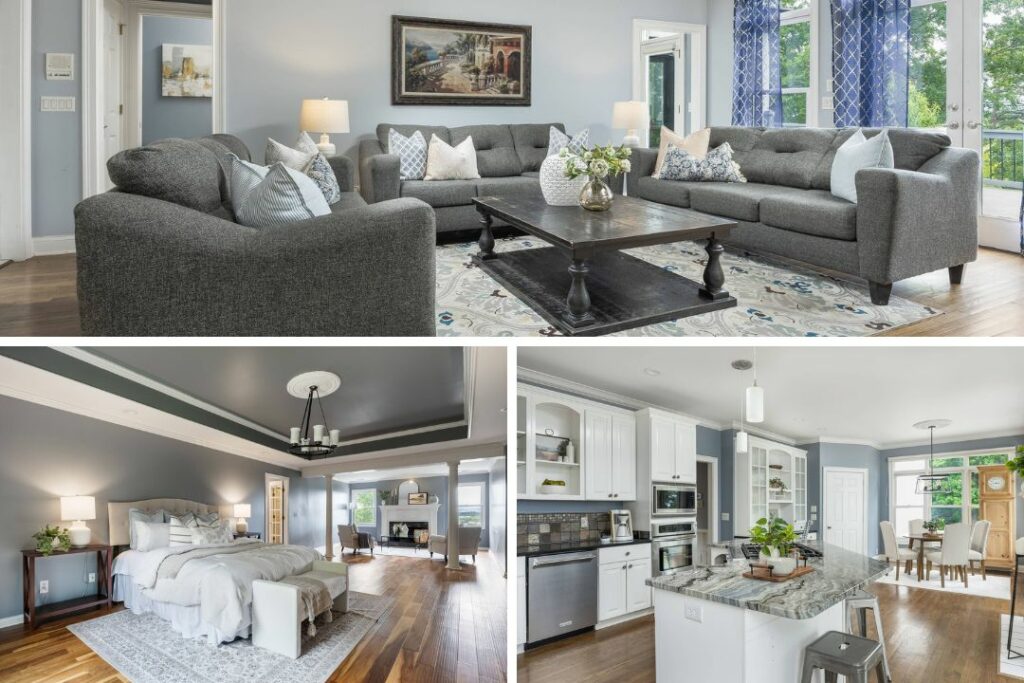
A single well-exposed image is easy to achieve. Consistent exposure across 30, 50, or 80 images from the same shoot is where most amateur edits fall apart.
When brightness levels shift from room to room without reason, it breaks the visual flow of a listing. Buyers notice — not always consciously, but the inconsistency registers as something being “off.”
Professional editors calibrate exposure with the full set in mind, not just the individual image. That means the kitchen, the master bedroom, and the living room all feel like they belong to the same home. For photographers running high-volume shoots, this level of consistency is nearly impossible to maintain manually at scale.
Photo editing services for real estate photographers use batch-processing workflows with human review gates to ensure that consistency holds across every image before delivery.
2. Accurate White Balance for Every Room
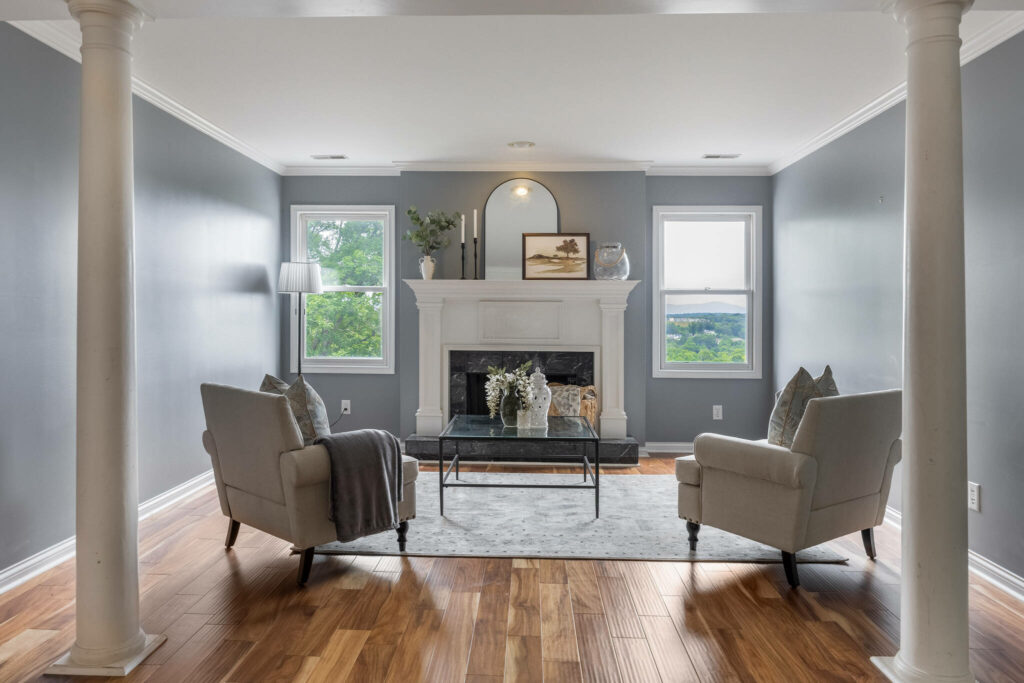
Color temperature is one of the first things buyers respond to in listing photos, even when they can’t name what they’re looking at. A room that reads slightly green, orange, or muddy creates an unease that’s hard to articulate but easy to feel.
White balance errors are especially common in interiors with mixed light sources — a window on one side, recessed lighting above, and a lamp in the corner all casting different temperatures at once. Correcting for all of them in a single shot requires local adjustments, not a single slider pull.
Professional editors understand that “accurate” doesn’t mean clinical. It means the room looks the way it feels in person — warm where it should be warm, neutral where it should be neutral. That’s what builds buyer confidence in a listing.
3. True Vertical Lines and Perspective Correction
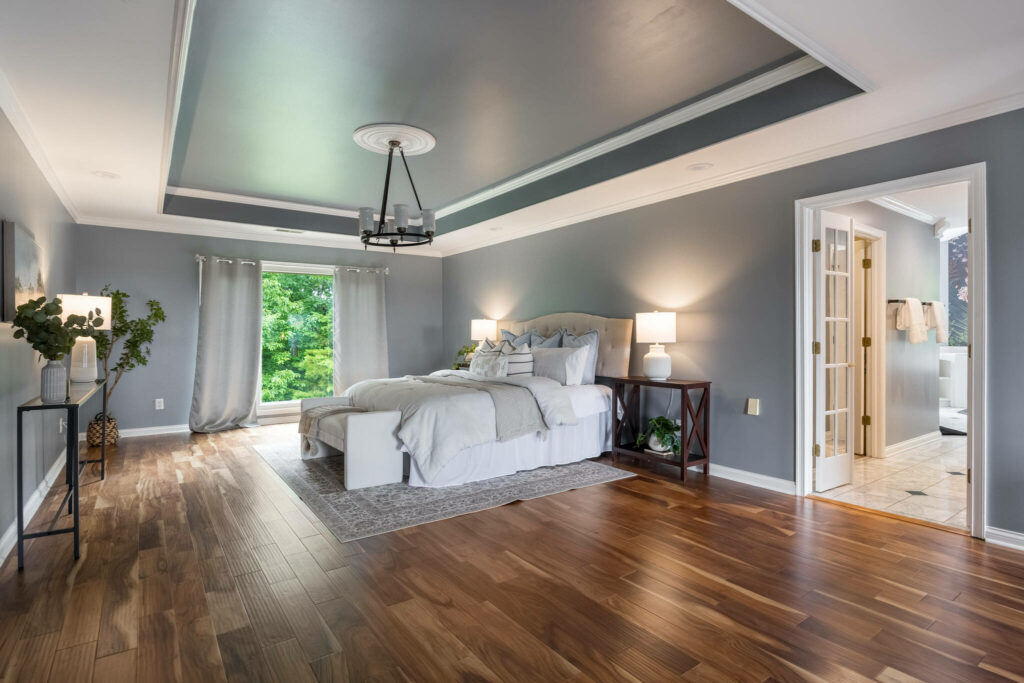
Wide-angle lenses are standard in real estate photography. They’re also the primary cause of perspective distortion — walls that lean inward, ceilings that tilt, and door frames that look like trapezoids.
Left uncorrected, that distortion makes even a well-staged room look structurally awkward. Buyers may not know why the image looks wrong. They just know the space feels unstable.
Perspective correction — straightening vertical lines so walls appear plumb and horizontal lines align — is a non-negotiable step in professional editing. It’s one of the first things experienced editors check and one of the last things less experienced editors think to fix.
4. Clean Window Pulls Without Blown Highlights
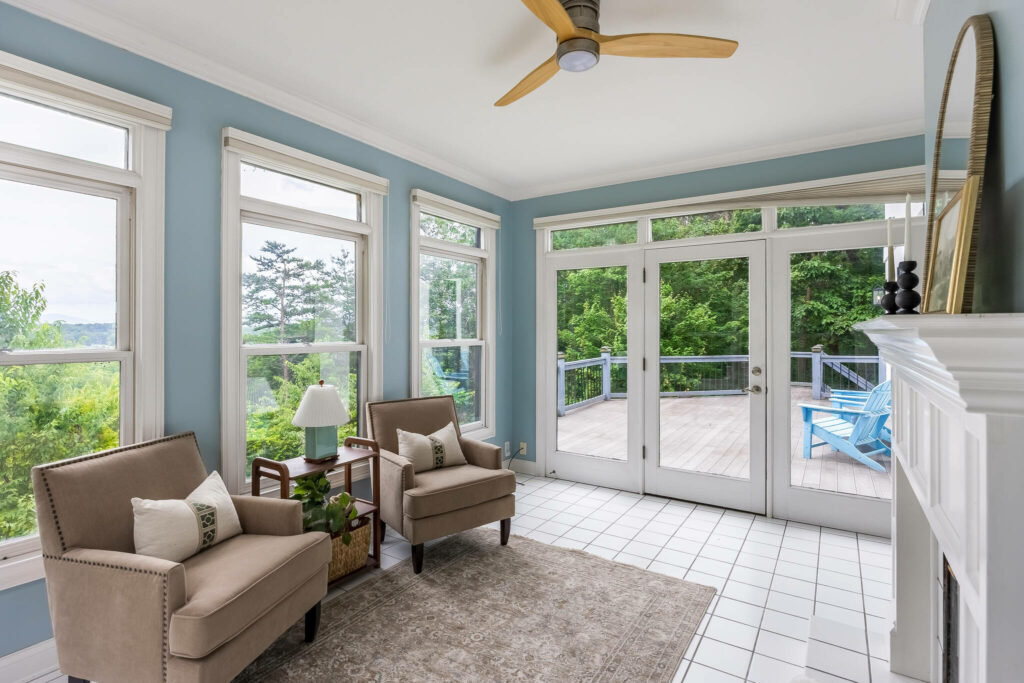
Windows are one of the most common problem areas in real estate editing. Expose for the interior and the windows blow out to white. Expose for the view outside and the interior goes dark.
Amateur edits tend to land at one extreme or the other. Photo editing services for real estate photographers pull the window exposure down to reveal either a visible exterior view or a soft, realistic glow — whichever fits the property and the light conditions at the time of the shoot.
This is typically done by blending bracketed exposures or applying a targeted luminosity mask to the window areas. Done well, it looks natural. Done poorly, it looks composited. The difference comes down to how carefully the blend is executed at the edges.
High-Quality & Consistent
Real Estate Photo Editing
Hire a dedicated editor with performance metrics from $7/hour.

5. Sky Replacement That Doesn’t Look Like Sky Replacement
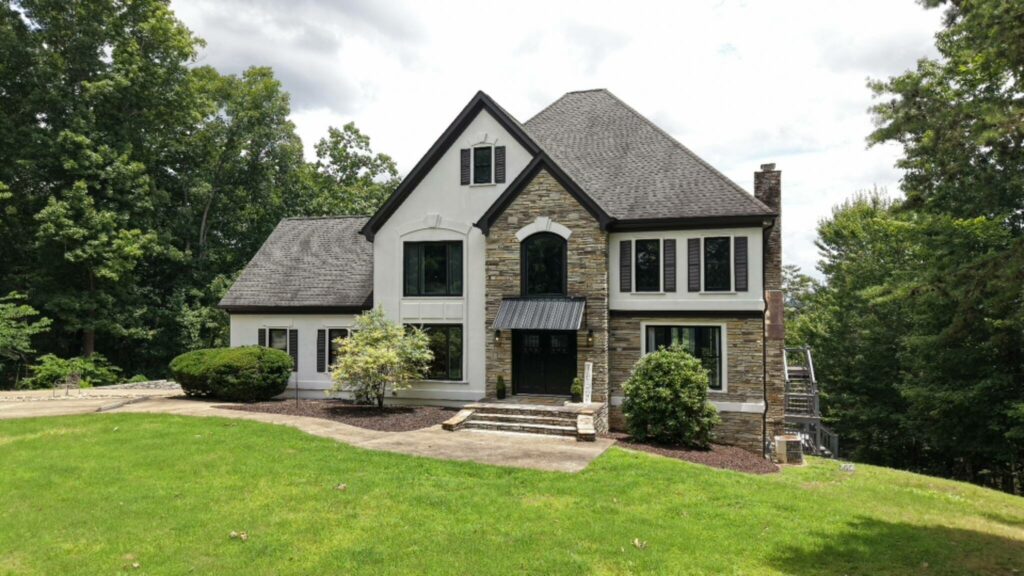
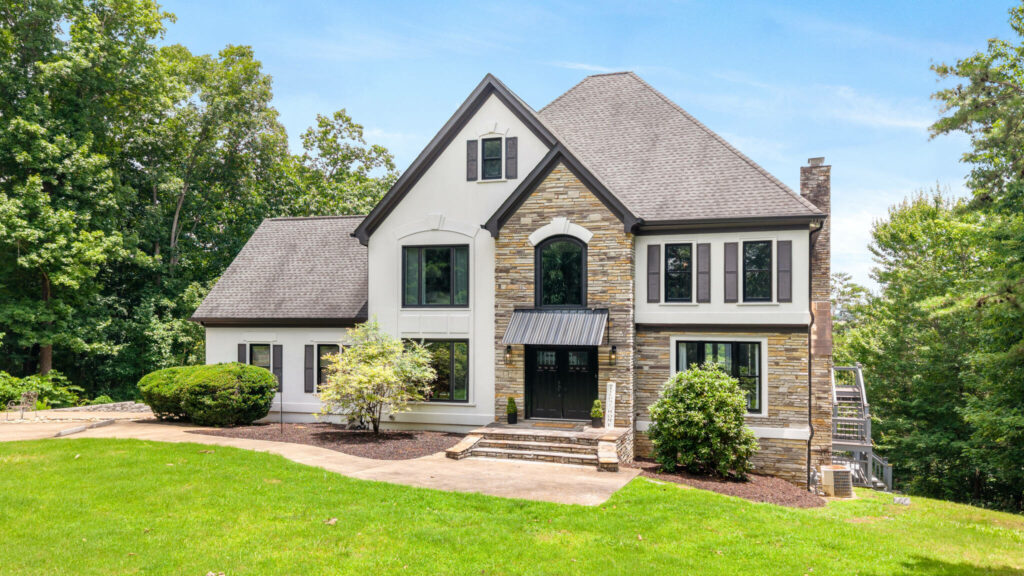
A blue sky with clean white clouds makes a listing photo look sharper, warmer, and more appealing. The challenge is getting the replacement to look like it was always there.
Problems show up at the edges — tree lines with complex branching, irregular rooflines, or architectural details that the masking algorithm didn’t follow precisely. These are the areas where amateur sky replacements give themselves away.
Professional editors review every sky replacement at the edges, not just the center of the frame. Rooflines get examined. Trees get refined. The color temperature of the replaced sky is matched to the light direction in the original image so the scene holds together. This is an area where AI tools still need a human eye — especially on properties with dense landscaping or non-standard architectural profiles.
6. Object Removal That Reads as Clean
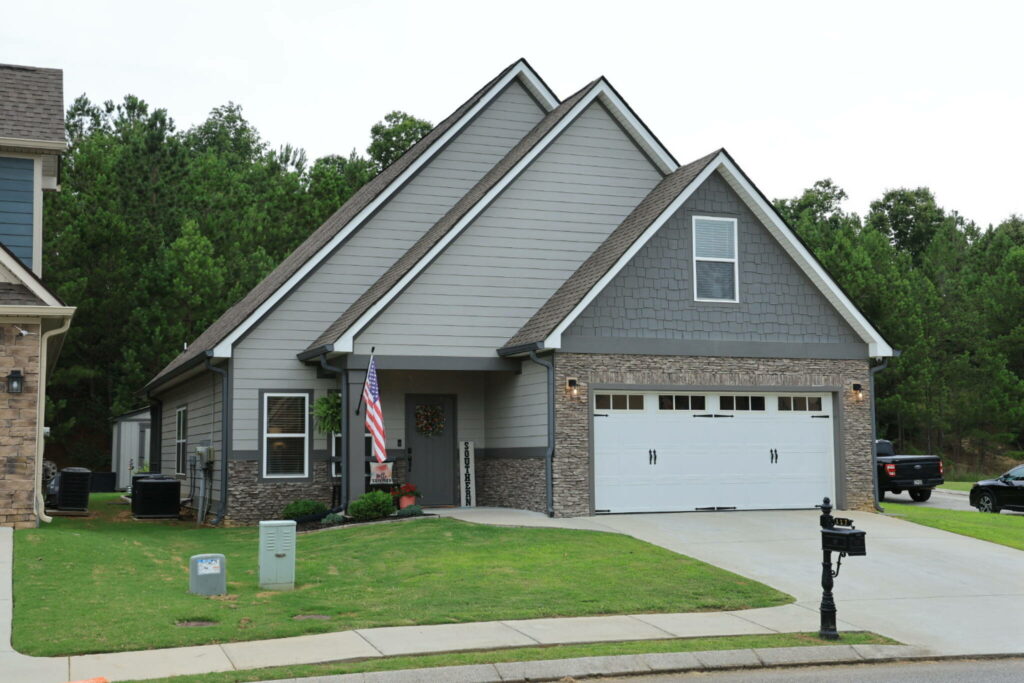
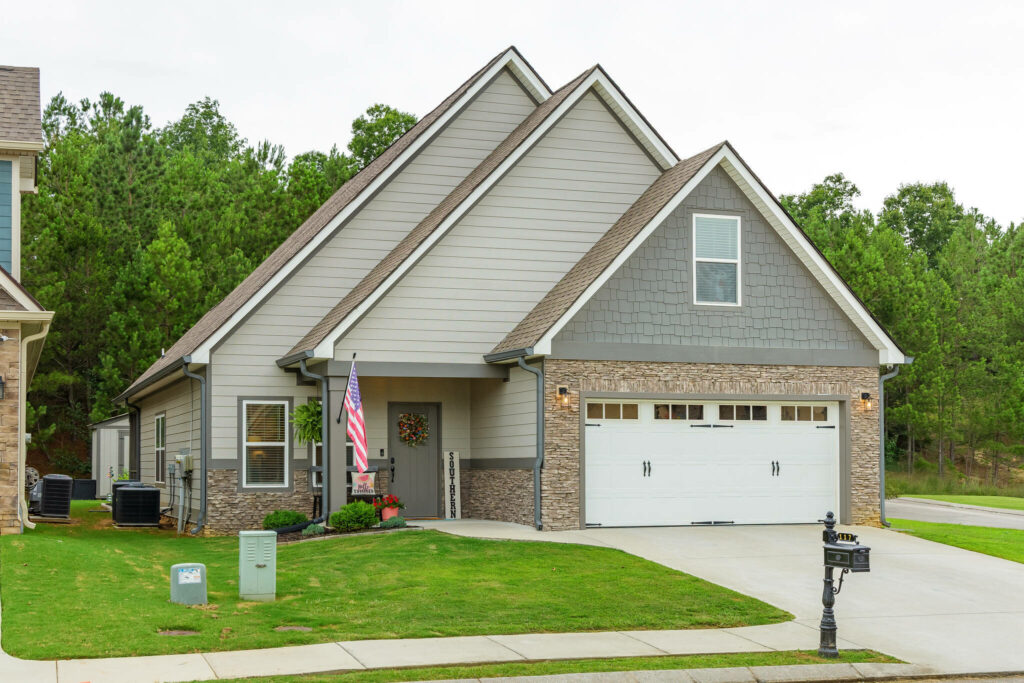
Removing a car from a driveway, a stray cable, a trash bin, or a garden hose looks straightforward until you try to do it in a cluttered or textured environment. Grass, gravel, brick, and hardwood floors all have patterns that content-aware tools struggle to replicate convincingly.
Rushed object removal leaves behind smeared textures, repeating patterns, or visible patches that draw the eye exactly where they shouldn’t. It’s the kind of thing that makes a buyer linger on the wrong part of the image.
Professional editors treat object removal as a finishing step, not a quick fix. They work at the pixel level where the background texture requires it and use reference from nearby areas of the same image to rebuild realistic surfaces. The result is a clean frame that doesn’t announce what was taken out.
7. A Color Grade That Enhances Without Overworking
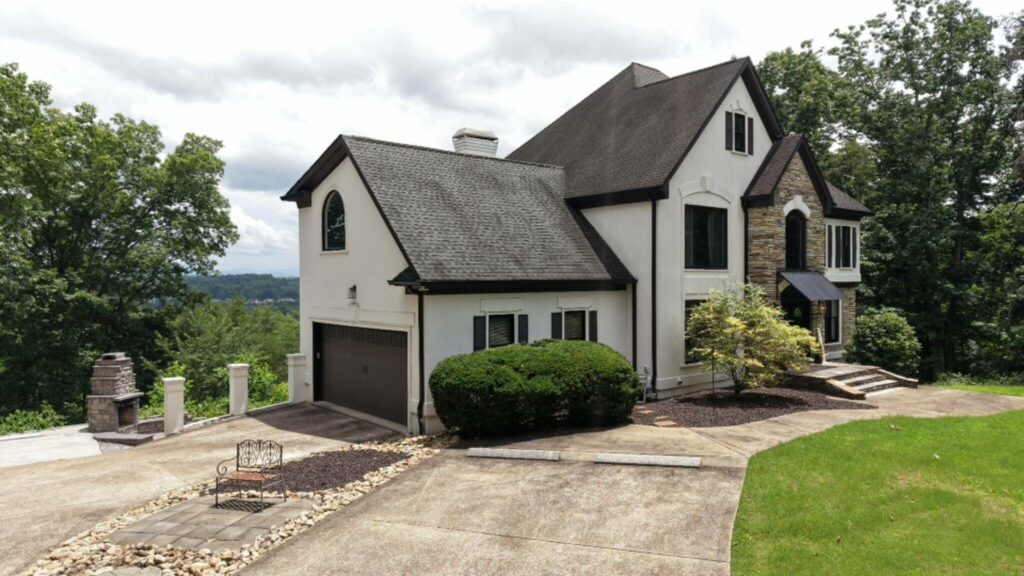
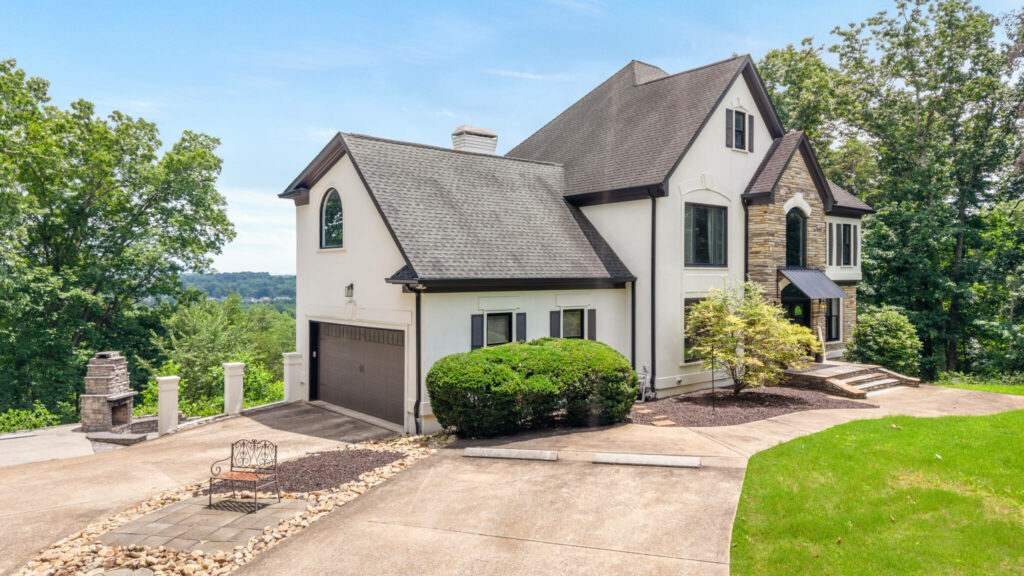
Over-saturated greens in the lawn. Blown-out golden tones on wood floors. Skin-tone walls that have drifted toward coral. These are the hallmarks of an edit that pushed the color grade too far.
The goal of color grading in real estate photography isn’t to make photos look dramatic. It’s to make them look like the best version of what the property actually is — natural-looking, consistent, and visually appealing without feeling manipulated.
Professional-grade color grading is restrained by design. It lifts the image without calling attention to itself. The edit feels invisible, and that’s exactly the point. When a buyer looks at a listing photo and feels drawn in, the last thing they should be thinking about is the editing.
How Photo Editing Services Help Photographers Deliver at This Level
Executing all seven of these details consistently — across every shoot, every listing, every week — is where volume creates pressure. A photographer editing their own work on a Sunday night has limited time to spend on perspective correction and edge refinement when 60 images need to be delivered by Tuesday.

That’s where professional photo editing services for real estate photographers provide the most value. The work stays consistent, the turnaround stays predictable, and the photographer gets time back to shoot more or recover before the next job.
PhotoUp’s editing team specializes in the details that separate good-enough from market-ready. Every order goes through a professional editor who checks consistency, corrects color, and reviews each image before it ships.
High-Quality & Consistent
Real Estate Photo Editing
Hire a dedicated editor with performance metrics from $7/hour.
Work With a Team That Handles the Details
PhotoUp offers a full range of professional editing services for real estate photographers, including:
- HDR photo editing — balanced exposures with natural-looking results across the full set
- Sky replacement — clean replacements with careful edge refinement
- Object removal — texture-matched cleanup on driveways, lawns, and interiors
- Color correction and grading — consistent, natural-looking results across every listing
- Perspective and lens correction — vertical lines straightened, distortion removed
- Virtual staging — furnished room composites for vacant listings
- Day-to-dusk conversion — twilight finishes created from daytime shoots
Browse Top Dedicated
Real Estate Photo Editors
Ready-to-hire editors for real estate photo editing, and more.
PhotoUp offers a consistent 12–24 hour turnaround, dedicated editors who match your style, and a scalable workflow that maintains quality as your workload grows. You can also try the service with a free, no-obligation listing edit.
How to Get Started
- Create a free PhotoUp account
- Upload your RAW or JPEG files from your shoot
- Select your preferred editing style and any specific instructions
- Receive your edited images within 12–24 hours
- Deliver polished, market-ready photos to your clients
Related Articles:
- How Sky Replacements Boost Real Estate Photo Appeal and Home Sales
- How HDR Photo Editing Fixes Dark Interiors Without Losing Window Views
- The Amazing Effects of Shadow Removal Editing in Real Estate Photography
- AI Virtual Staging Mistakes That Can Hurt Your Listing
- How to Do Stunning Day-to-Dusk Conversions That Actually Sell Homes