Table of Contents
- Why Interior Exposures Are a Physics Problem, Not a Skill Problem
- What HDR Blending Actually Does — and What It Doesn’t
- How Professional HDR Photo Editing Services Fix the Dark Interior Problem
- Where AI HDR Editing Works — and Where Human Judgment Still Matters
- What to Look for When Choosing an HDR Photo Editing Service
- How PhotoUp’s HDR Photo Editing Services Handle Dark Interiors
Every real estate photographer faces the same challenge: expose for the room and the windows turn white; expose for the view outside and the interior becomes too dark. This happens because cameras cannot capture the full range of light in high-contrast scenes with a single exposure.
Professional HDR photo editing services solve this by blending multiple exposures into a single balanced image. The result is a photo that shows both interior details and outdoor views clearly.
The quality of HDR photography depends heavily on post-production. Skilled editors blend exposures carefully, control highlights and shadows, and avoid the over-processed look often associated with poor HDR work. Understanding this process helps photographers and agents achieve more professional listing images.
Why Interior Exposures Are a Physics Problem, Not a Skill Problem
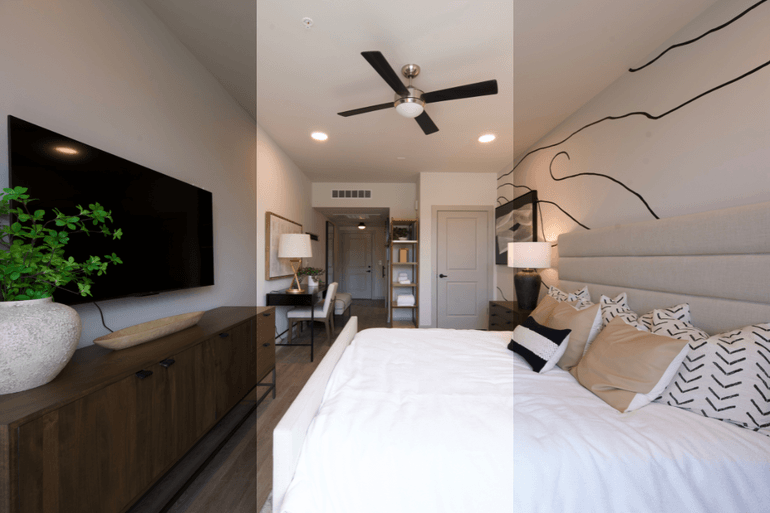
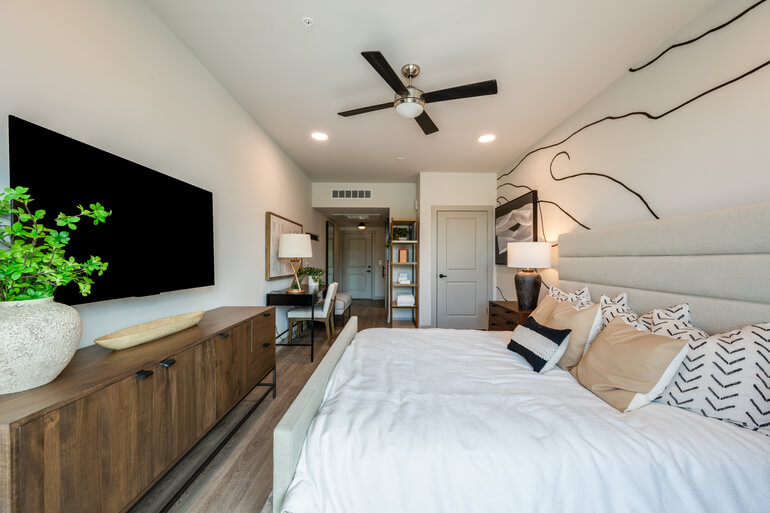
When you walk into a room with bright windows, your eyes naturally adjust to show detail in both shadows and highlights. Cameras can’t do that. A single exposure often forces photographers to choose between a properly exposed interior or a clear view outside the windows.
In many homes, the difference between indoor and outdoor light exceeds what a camera sensor can capture in one shot. While shooting in RAW helps recover some detail, blown-out highlights cannot be restored once the data is lost.
That’s why photographers use bracketed HDR capture, taking multiple exposures of the same scene and blending them together. The quality of that blend depends on the editing process, which is where professional HDR work stands apart.
What HDR Blending Actually Does — and What It Doesn’t
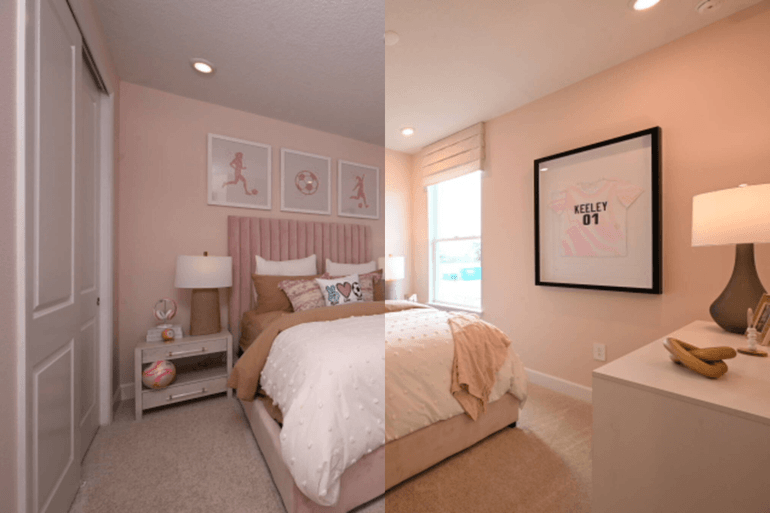
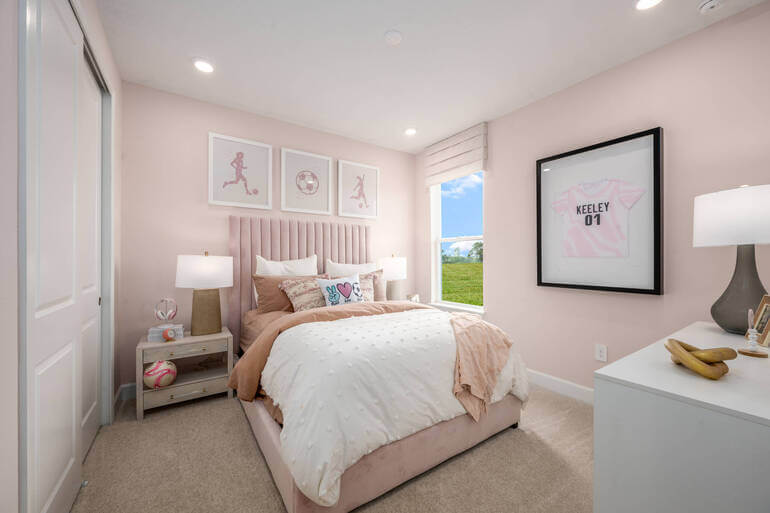
HDR blending combines the best-exposed areas from multiple bracketed photos into a single image. The goal is simple: create an interior photo that shows both room details and clear window views without sacrificing either.
While automated HDR tools can handle simple scenes, they often struggle with challenging interiors. Mixed lighting, reflective surfaces, complex window shapes, and detailed outdoor views can produce unnatural results when processed automatically.
Professional editors go beyond automatic blending. They make targeted adjustments to windows, lighting, and color balance to create a natural-looking image that reflects how the space appears in person, without the halos or exaggerated effects often associated with poor HDR processing.
How Professional HDR Photo Editing Services Fix the Dark Interior Problem
Professional HDR photo editing services do more than blend exposures. They use targeted techniques to create balanced, natural-looking interior photos while preserving details both inside and outside the windows.
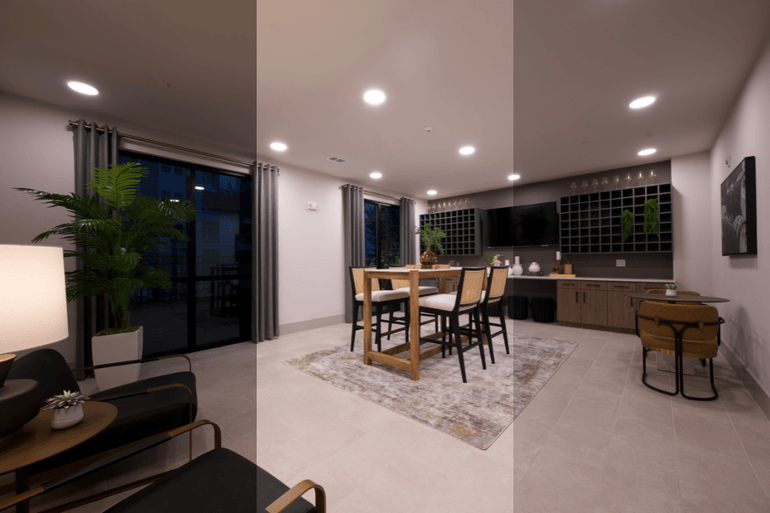
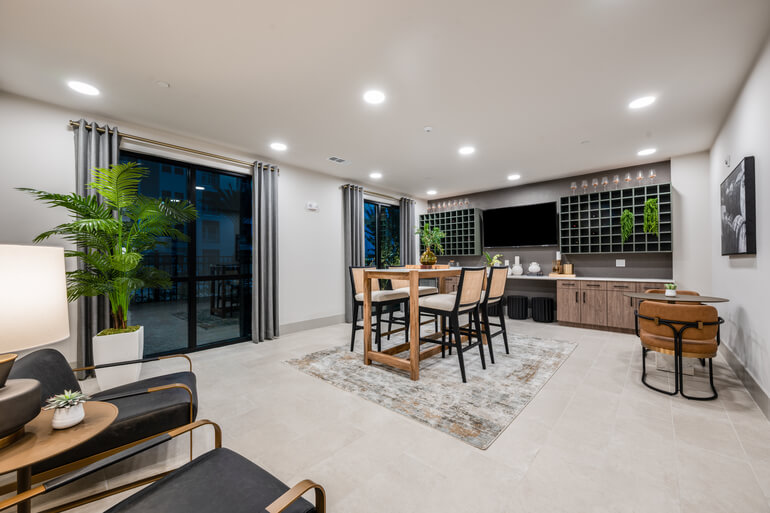
Key steps often include:
- Window masking and exposure adjustments to maintain clear outdoor views without darkening the room.
- Color correction to balance warm indoor lighting with cooler natural daylight.
- Shadow recovery that reveals detail without introducing excessive noise.
- Perspective correction to keep walls, ceilings, and vertical lines straight and realistic.
Just as important is consistency across the entire listing. Professional editors ensure every image matches in brightness, color, and contrast, creating a polished presentation that helps properties make a stronger impression online.
High-Quality & Consistent
Real Estate Photo Editing
Hire a dedicated editor with performance metrics from $7/hour.

Where AI HDR Editing Works — and Where Human Judgment Still Matters
AI-assisted HDR editing has improved significantly. For a large percentage of standard real estate shoots, it produces usable results quickly. Understanding where it performs well and where it doesn’t help you make workflow decisions that protect quality.
AI HDR editing handles well:
- Exposure blending on standard daytime interiors with clean, consistent window light
- Batch color consistency across 30–80 images from the same shoot
- White balance correction on straightforward mixed-light rooms
- Basic perspective and lens distortion correction
- HDR merging on shots with no significant subject movement between frames
Where human editors still add measurable value:
- Window views with complex tree lines, irregular architectural edges, or large glass surfaces that produce reflections
- Mixed-light interiors where color temperature varies significantly between zones
- Luxury listings where the margin for error is narrow and client expectations are defined
- Any shoot where a recurring client has a specific, non-standard style requirement
- Twilight and day-to-dusk conversions, where the tonal balance is subjective and stakes are high
The practical framework is this: AI editing handles the foundational 80% — the consistent corrections that apply across most images in a set. Human review catches the 20% that requires local judgment, contextual decisions, or client-specific standards. Services that combine both deliver the speed advantage of automation without the quality risk of fully unreviewed output.
What to Look for When Choosing an HDR Photo Editing Service
Not all editing services approach HDR the same way. A few things worth evaluating before committing to a vendor:
Turnaround time vs. review process. Fast turnaround is valuable. But fast with no human review gate is a liability if you’re sending images directly to clients. Know whether the service includes a quality check before delivery.
Sample images from similar shoot types. Ask to see samples that match your typical work — standard suburban interiors, luxury properties, or listings with significant window views. The challenge of blending a two-bedroom condo and a beachfront property are different, and samples tell you what a service can actually execute.
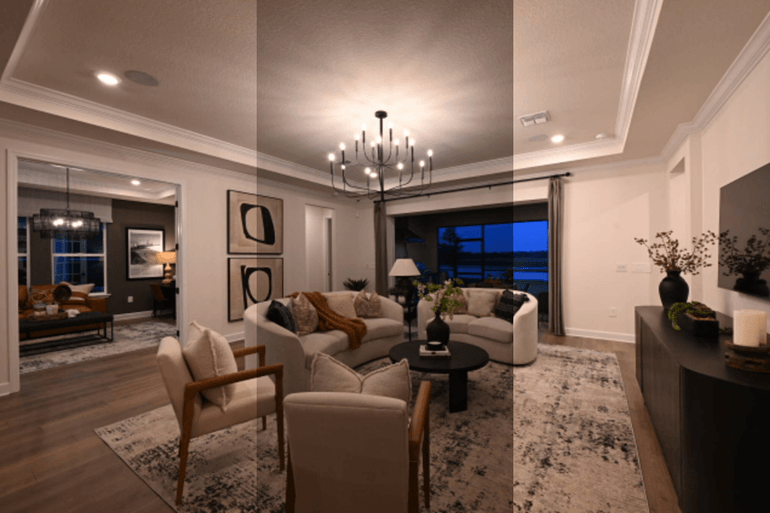
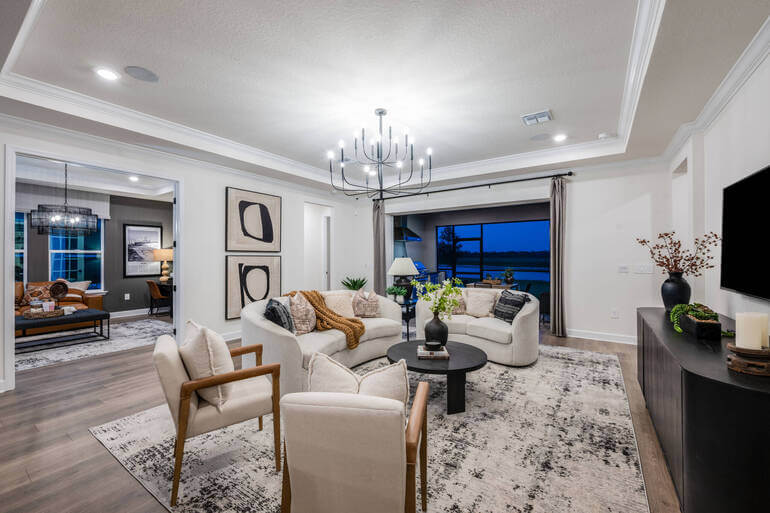
Revision policy. Even with experienced editors, some images need a second pass. A clear revision policy is a sign that the service is confident enough in their work to stand behind it.
Consistency across a listing set. Ask whether individual images are edited in isolation or whether editors reference the full shoot for consistency. Batch consistency is what separates professional output from passable output.
High-Quality & Consistent
Real Estate Photo Editing
Hire a dedicated editor with performance metrics from $7/hour.
How PhotoUp’s HDR Photo Editing Services Handle Dark Interiors
PhotoUp’s editing team handles HDR blending as a core service, with a workflow built specifically for real estate photography volume and quality requirements.
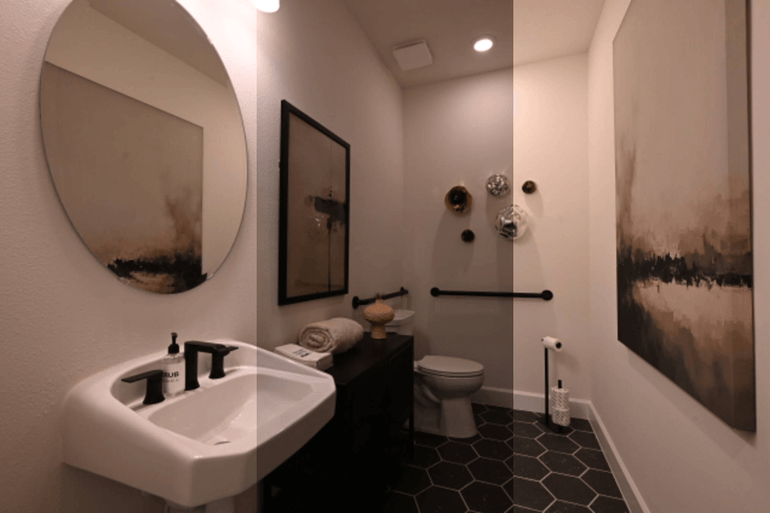
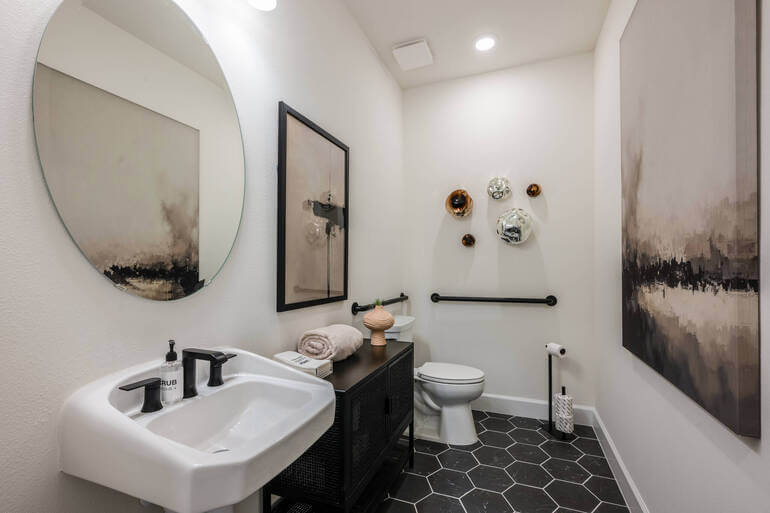
Here’s what the process includes:
- Window masking and exterior view blending — each window treated as a separate zone, exposed and color-corrected independently
- Interior color temperature correction — balancing competing light sources across the full frame
- Shadow recovery and highlight protection — pulling detail from dark corners without noise amplification
- Perspective and lens correction — applied consistently across every image in the set
- Listing-level consistency review — editors reference the full shoot, not individual images in isolation
Why photographers work with PhotoUp comes down to reliability, quality, and simplicity. Standard orders are typically delivered within 12–24 hours, every image is reviewed by professional human editors, and pricing remains straightforward with no per-image minimums. New customers can also try the service with a free trial order and no commitment required.
How to get started:
- Create a free PhotoUp account
- Upload your bracketed RAW files or JPEGs
- Select HDR editing as your service type
- Receive edited images within 12–24 hours
- Review, request revisions if needed, and deliver to your client
Try a free test order today!
Related Articles:
- How Real Estate HDR Photo Editing Services Elevate Property Listings
- 5 Signs It’s Time to Outsource Your Real Estate Photo Editing
- How AI Real Estate Photo Editing Reshapes Photographers Workflows
- The Cost of Skipping Real Estate Photo Editing (And Why It Hurts Listings)
- Why Real Estate Photo Editing Is the Hidden Driver Behind Faster Sales