Table of Contents
- What Does a Wedding Photo Editing Service Actually Do?
- How Long Does Wedding Photo Editing Take?
- What Does Wedding Photo Editing Cost?
- What to Ask Before Hiring Wedding Photo Editing Services
- Self-Editing vs. a Per-Wedding Freelancer vs. a Dedicated Editing Service
- Get Consistent, On-Time Wedding Galleries Without Editing Them Yourself
Wedding photo editing prices can look simple, but what’s actually included isn’t always clear. A per-photo rate and a flat package can cover very different things. Does it cover culling? Skin retouching? A consistent color grade across 800 images, or just the basics?
That gap between the price and the deliverable is where a lot of photographers get stuck.
This article breaks down what’s actually included in wedding photo editing services, where the tiers split, what typically costs extra, and what to ask before you hand over a gallery.
What Does a Wedding Photo Editing Service Actually Do?
A wedding photo editing service takes a photographer’s raw files and turns them into a finished, deliverable gallery. That work happens in stages: culling the shoot down to the best frames, correcting exposure and white balance, applying a consistent color grade, retouching where needed, and cleaning up backgrounds and distractions before final delivery.
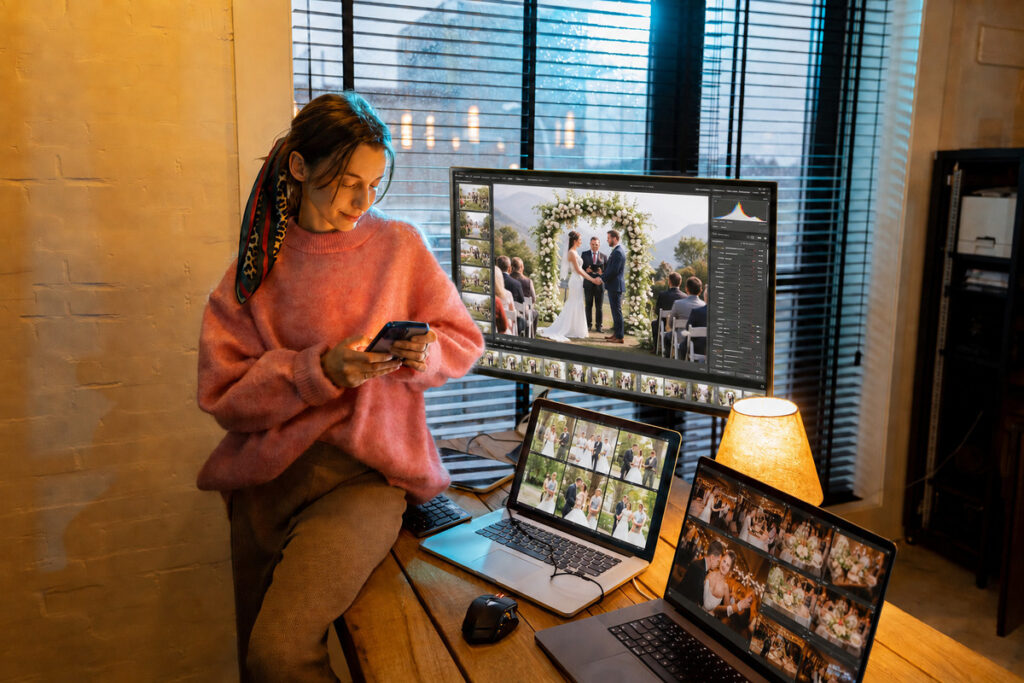
Every wedding photo editing service structures this slightly differently, but the core stages are consistent across the industry. Some bundle everything into one flat rate. Others price each stage separately, so culling, correction, and retouching show up as line items rather than one number.
Knowing the stages ahead of time makes it easier to read a quote for what it actually covers. A $0.35-per-image rate that only includes culling and color correction is a different offer than the same rate with retouching folded in, even though the number on the page looks identical.
Here’s the full sequence most services follow, roughly in order:
| Culling: sorting thousands of raw captures down to the images worth editing |
| Color correction: fixing exposure and white balance so lighting looks consistent |
| Color grading: applying a consistent look or style across the whole gallery |
| Retouching: cleaning up skin, stray hair, and minor blemishes |
| Background cleanup: removing distractions like exit signs, cords, or stray guests |
| Final review and delivery: quality-checking the gallery before it goes out |
The stages that eat the most time deserve the closest look, starting with the one that happens before any actual editing begins.
Culling: Sorting Thousands of Images Down to the Gallery
Culling is the first job in any wedding gallery, and it’s a bigger task than it sounds. A full wedding day typically produces 2,000 to 4,000 raw captures, and most photographers cull down to a final gallery of 600 to 1,000 images, a ratio of roughly 3:1 to 4:1 from shot to delivered.
That reduction means someone has to review every frame and decide what stays: cutting duplicates, closed eyes, motion blur, and transitional shots while keeping the ones that actually tell the story of the day.
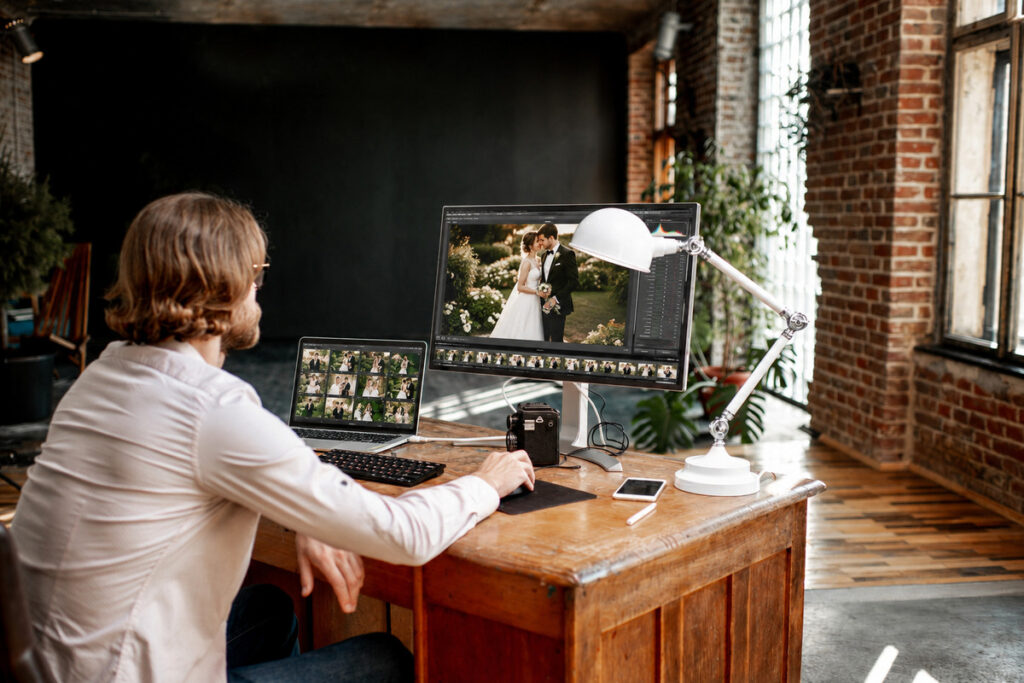
Some services include culling in the base price. Others charge for it separately or ask photographers to cull their own shoot before sending files over. Ask which model applies before you sign on.
It’s also the stage where volume drives cost the most directly. A service pricing by the delivered image has an incentive to cull tightly; one pricing by the raw file doesn’t. Neither approach is wrong, but it changes what a quote based on “per image” actually means. Ask whether that number refers to raw files sent or final images delivered.
Color Correction and White Balance: Making Every Photo Match
A wedding moves through wildly different lighting in a single day: outdoor ceremony light, a dim reception hall, mixed indoor tungsten and window light during getting-ready shots. Color correction evens all of that out so the gallery doesn’t look like it was shot across five different cameras.
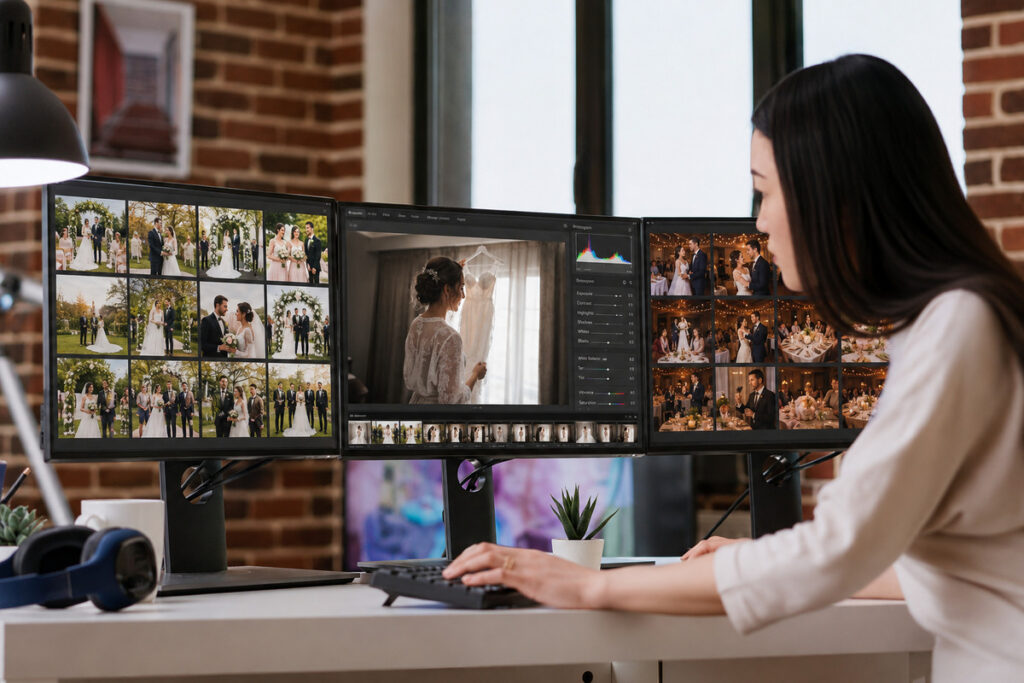
This stage is where color correction and color grading get confused, and the two aren’t the same thing. Color correction fixes technical problems, exposure, white balance, and skin tone accuracy. Color grading is the creative layer on top of that: the warm, airy look or the moody, contrast-heavy style a photographer builds their brand around.
Wedding photo editing services should handle both, but only grading reflects a photographer’s specific style. Confirm the service can match presets or examples you provide.
Retouching: What’s Basic, What’s Premium, and What Costs Extra
Retouching is where pricing tiers matter most, and where photographers get surprised by add-on costs. Basic retouching covers the small, expected fixes. Premium retouching covers heavier, time-intensive work that most services price per image rather than folding into a flat rate.
| Tier | Typically includes | Typical cost per image |
|---|---|---|
| Basic | Skin smoothing, stray hair removal, minor blemish fixes, cropping | $0.20–$1.00 |
| Mid-level | Basic tier plus teeth whitening, closed-eye fixes, tone adjustments | $1.00–$5.00 |
| Premium | Mid-level tier plus object removal, background swaps, liquify/body retouching | $2.50–$15.00+ |
Pricing ranges vary by provider, but this general split holds across the industry. Most weddings only need premium retouching on a handful of hero shots, not the full gallery, so ask whether a service prices per image or offers a set number of premium edits within a package.
Background Cleanup and Scene Consistency
Retouching handles people, while background cleanup handles distractions like exit signs, stray cables, or guests in the background. Basic cleanup is often included in standard editing, while major changes like full background swaps typically cost extra.
Consistency matters across the entire gallery. Services often use presets and batch editing to keep color, exposure, and overall style consistent before fine-tuning individual images.
This is where the editing setup can make a difference. A dedicated editor can maintain the same look across hundreds of images, while a rotating team may have a harder time keeping every photo consistent.
Browse Top Dedicated
Real Estate Photo Editors
Ready-to-hire editors for real estate photo editing, and more.
Does Wedding Photo Editing Include Album Design?
Usually not by default. Album design (laying out spreads, selecting a sequence, building a print-ready file) is a distinct skill from photo editing, and most wedding photo editing services treat it as an add-on rather than a standard inclusion.
If album design matters for your workflow, confirm it upfront rather than assuming it’s bundled. Some services offer it as a paid extra with a per-spread or per-album rate; others don’t offer it at all and expect photographers to handle layout separately or through a dedicated album vendor.
How Long Does Wedding Photo Editing Take?
Traditional turnaround for a full wedding gallery runs 4 to 8 weeks, but client expectations have moved faster than that standard. Around 31% of clients now expect their full gallery within 14 days, while most expect at least a sneak peek within 24 to 48 hours of the wedding.
That gap between traditional timelines and current expectations is exactly why turnaround time deserves a direct question upfront, not an assumption.
Wedding photo editing services with a 6-to-8-week standard turnaround might still be a good fit for volume or price, but weigh that against what your clients expect and when. Some services offer rush tiers for an added fee, while others build faster turnaround into their standard pricing.
Focus on Photography
We'll Handle the Rest
Save time with a dedicated PhotoUp Coordinator.

What Does Wedding Photo Editing Cost?
Cost depends on volume, service tier, and whether you’re paying per image or per wedding. Basic editing, such as culling and color correction, typically costs $0.20 to $0.50 per image. Add detailed retouching, and rates can climb to $2.50 to $15 or more per image, depending on complexity.
For a full gallery of 800 to 1,000 delivered images, that math puts most outsourced wedding editing somewhere between $400 and $2,500, depending on how much premium retouching the gallery needs.
Flat-rate packages exist too, usually bundling a set number of images at each tier, which can be easier to budget against than per-image pricing if your gallery sizes are fairly consistent from wedding to wedding.
What to Ask Before Hiring Wedding Photo Editing Services
A quote tells you the price. It doesn’t always tell you what you’re actually getting. Before committing a gallery to a new service, get clear answers on a few things:
| Turnaround time: what’s standard, and what rush pricing looks like |
| Revision policy: how many rounds are included, and what counts as a revision versus a new edit |
| Editor consistency: whether the same editor or team handles your galleries, or it rotates |
| Minimum order requirements: some services charge a surcharge below a certain image count |
| Sample galleries: ask to see full, unedited-to-edited examples, not just polished highlights |
| File security: how raw files are stored, backed up, and eventually deleted |
None of these questions are unreasonable to ask a vendor, and a service that answers them clearly is usually one that’s confident in its process.
Self-Editing vs. a Per-Wedding Freelancer vs. a Dedicated Editing Service
Most photographers land on one of three approaches, and each comes with a different trade-off between control, consistency, and time.
| Approach | Best for | Trade-off |
|---|---|---|
| Self-editing | Full creative control, small volume | Caps how many weddings you can realistically book |
| Per-wedding freelancer | Extra capacity during peak season | Rarely learns your specific style; consistency varies |
| Dedicated editing service | Volume, consistency, faster turnaround | Requires upfront vetting and some loss of hands-on control |
There’s no universally right answer here. A photographer shooting eight weddings a year has different needs than one shooting forty, and the right fit often changes as volume grows. What matters is knowing which trade-off you’re making, rather than defaulting into one option because it’s familiar.
The short version: self-editing protects control at the cost of your time, a freelancer buys capacity without buying consistency, and a dedicated service trades some hands-on control for a repeatable process you don’t have to manage yourself.
Get Consistent, On-Time Wedding Galleries Without Editing Them Yourself
Editing eats hours that could go toward shooting, marketing, or simply taking time off after a wedding weekend. PhotoUp’s wedding photo editing services cover the full range discussed in this article, from culling to final retouching, with a consistent process behind every gallery.
PhotoUp’s wedding editing service includes:
- Culling down to a polished, delivery-ready gallery
- Color correction and white balance matched across mixed lighting
- Consistent color grading based on your style or presets
- Basic and premium retouching, priced by tier
- Background cleanup and distraction removal
- Quality review before delivery
For photographers who want more than editing handled, a dedicated PhotoUp Coordinator can also manage the production side of the business: tracking delivery timelines, coordinating revision requests, and keeping clients updated between booking and gallery delivery.
Focus on Photography
We'll Handle the Rest
Save time with a dedicated PhotoUp Coordinator.
Why Choose PhotoUp?
PhotoUp has edited photos for thousands of photographers since 2011. Editors work from your presets and standards, not a generic template, and every gallery goes through a quality check before it’s delivered.
How to Get Started
- Share a sample gallery and your editing preferences
- Get matched with an editing workflow built around your style
- Send your next wedding gallery and review the turnaround
- Scale up with a dedicated Coordinator if you need more than editing covered
Explore PhotoUp’s wedding photo editing service and see what a finished gallery looks like before you commit a full wedding to it.
Related Articles:
- Scale Your Wedding Photography Business With Professional Photo Editing Services
- How Wedding Photo Editing Helps You Deliver Stunning Galleries
- Dedicated Real Estate Photo Editor for Consistent, High-Quality Edits
- Photographer Assistant vs. Virtual Assistant: What’s the Difference?
- Photography Virtual Assistant: More Than Just Photo Editing