Table of Contents
- Why “I Need an Assistant” Means Five Different Things
- What Does a Photographer Assistant Do?
- What About an Editing Assistant?
- What Does a Virtual Assistant for Photographers Do?
- Photographer Assistant vs. Virtual Assistant Side by Side
- Which Type of Assistant Does Your Photography Business Need?
- When a Virtual Assistant Isn’t Enough
- Get the Right Support Behind the Camera
When photographers decide they need an assistant, they’re often choosing between roles with very different responsibilities. One works on location, another handles administrative tasks remotely, and another focuses on post-production editing.
Hiring the wrong type of assistant means paying for help without solving the workflow bottleneck that’s slowing your business down.
This guide explains what each role does, how they differ, what each option typically costs, and how to choose the right photographer assistant for your photography business.
Why “I Need an Assistant” Means Five Different Things
Photography businesses have two kinds of work. There’s the work that happens on shoot day: scouting, setup, lighting, shooting, teardown. And there’s the work that surrounds it: booking, scheduling, editing coordination, gallery delivery, invoicing, follow-up, marketing.

The second category is bigger than most photographers expect. A survey by Time etc reported in Forbes found that the average entrepreneur spends 36% of the working week on small administrative tasks like invoicing, data entry, and scheduling.1 For a photographer, that’s a third of the week that isn’t behind a camera and isn’t billable.
“Assistant” gets used for roles on both sides of that divide, which is where the confusion starts. A photographer’s assistant works the shoot-day side. A virtual assistant works the business side. An editing assistant sits in between. Business support for photographers is the umbrella; the roles underneath it are not interchangeable.
Let’s take a closer look at each one.
What Does a Photographer Assistant Do?
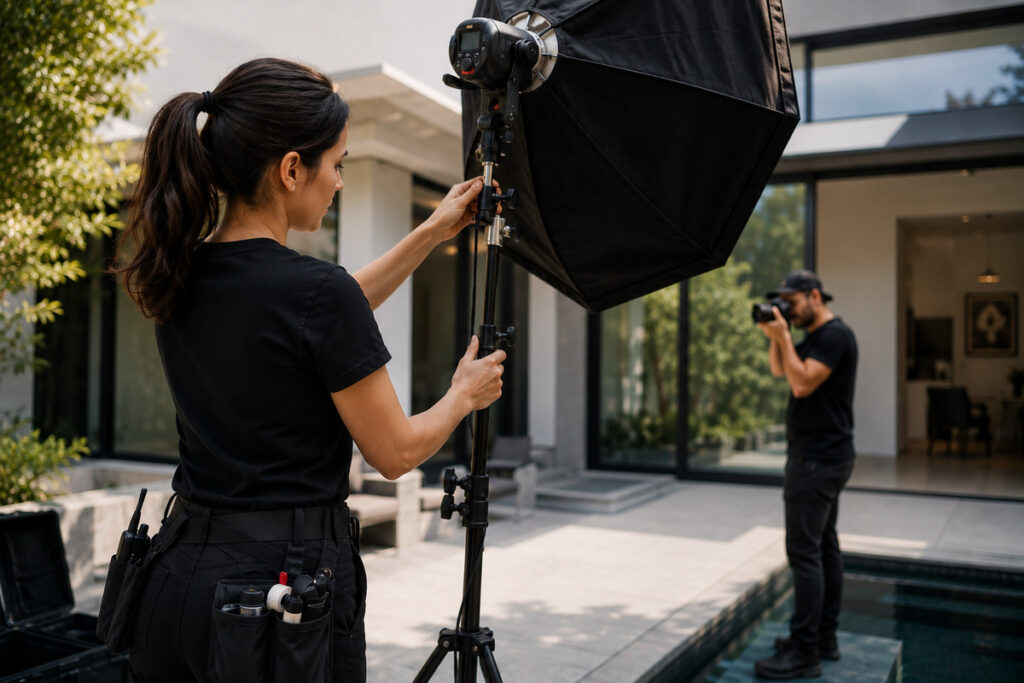
A photographer assistant (also called a photo assistant) works with you in person, on location or in the studio. The job is to keep the shoot moving so you can stay focused on the images.
Typical responsibilities include:
- Loading, unloading, and organizing gear
- Setting up and tearing down lights, stands, and backdrops
- Holding reflectors, flagging light, and adjusting modifiers mid-shoot
- Managing shoot-day logistics like parking, access, and timing
- Backing up cards and organizing files after the shoot
Cost depends on market and experience. ASMP’s 2025 assistant guide puts freelance day rates at $400–$700 in New York and Los Angeles and $300–$500 in mid-size markets.2 Salaried photography assistants average around $30 per hour nationally.3
Is a Second Shooter the Same as a Photo Assistant?
No, and the distinction matters when you’re hiring. An assistant’s job is support: gear, light, logistics. A second shooter is actively photographing, covering what you can’t reach. Think of the groom’s reaction while you’re focused on the bride, or detail shots while you work through formals. Some people do both in a single day, but they’re separate skills and usually separate rates.
A photo assistant is the right hire when shoot day itself is your bottleneck. You’re turning down complex jobs, shoots run long, or the setup is more than one person can physically manage. What an on-site assistant can’t fix is the inbox. When the shoot wraps, their workday ends. Yours doesn’t.
Focus on Photography
We'll Handle the Rest
Save time with a dedicated PhotoUp Coordinator.

What About an Editing Assistant?
An editing assistant handles post-production: culling, color correction, exposure balancing, retouching, and gallery prep. The role can be in-house, freelance, or outsourced to a specialized editing service.
This is also the role AI has changed the most. Modern AI editing tools handle much of the consistent, foundational work in genres like real estate photography, including exposure blending, sky replacement, and lens correction. What they don’t replace is judgment.
Someone still has to catch the images that need a human eye: a client-specific style, an awkward crop, a window pull that looks off. The practical setup for most studios is AI doing the baseline and a person managing quality and consistency.
Browse Top Dedicated
Real Estate Photo Editors
Ready-to-hire editors for real estate photo editing, and more.
If editing turnaround is your bottleneck, this role (or a service that provides it) solves that specific problem. It doesn’t touch scheduling, client communication, or marketing.
What Does a Virtual Assistant for Photographers Do?
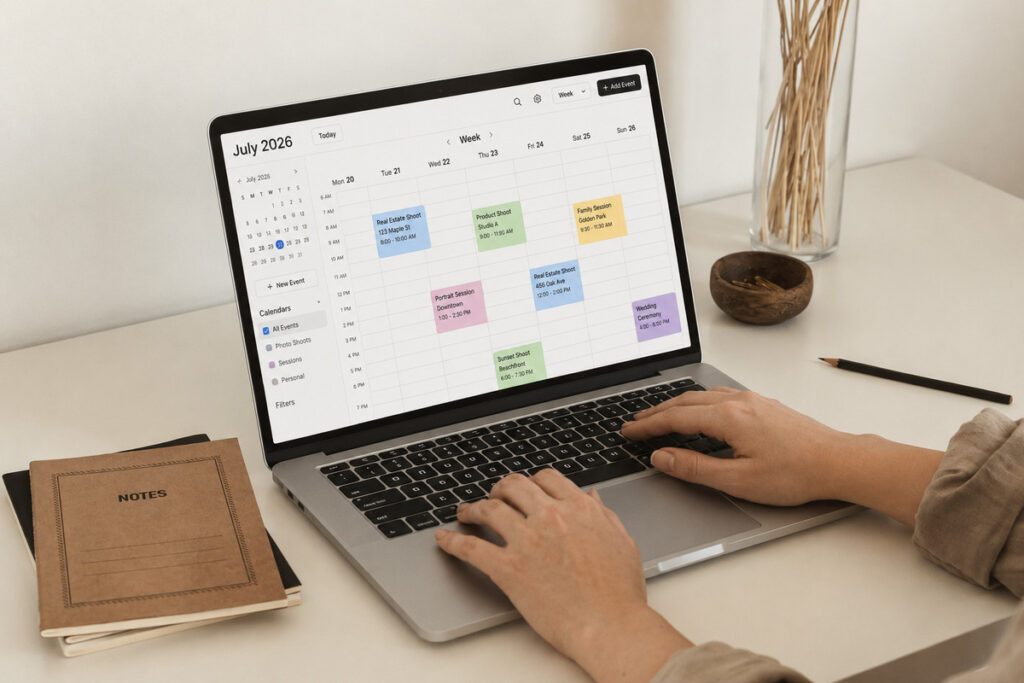
A virtual assistant (VA) works remotely, usually part-time, on the business side of your photography operation. The tasks photographers can delegate to a virtual assistant fall into three buckets:
- Administrative: inbox management, scheduling, invoicing, contracts
- Production support: coordinating edits, tracking orders, preparing and delivering galleries
- Growth: social media posting, CRM updates, lead follow-up
Rates vary by location and specialization. Offshore VAs, most commonly in the Philippines, typically run $4–$15 per hour, while US-based VAs range from roughly $25 to $75 per hour, according to VA Masters’ 2026 rate guide.4
The model has real strengths: low cost of entry, flexible hours, no employment overhead, and a talent pool that isn’t limited to your zip code.
It also has honest limits. A VA works through the task list you hand them, which means you design the systems, write the instructions, set the priorities, and check the output. Industry knowledge varies widely; a generalist VA may run an inbox well but not know what a twilight shoot or an MLS deadline implies. And because many VAs juggle several clients, responsiveness and continuity depend on the individual you land.
A VA can still be the right call. Just know what you’re buying: task support, not role ownership. That difference becomes important in a moment.
Photographer Assistant vs. Virtual Assistant Side by Side
Here’s how the five roles compare:
| Role | Where they work | What they handle | Typical cost | Best when |
|---|---|---|---|---|
| Photo Assistant | On location, with you | Gear, lighting, shoot-day logistics | $300 – $700/day freelance | Shoot day is the bottleneck |
| Editing Assistant | In-house or outsourced | Culling, editing, gallery prep | Varies by volume | Post-production is the bottleneck |
| Virtual Assistant | Remote | The specific tasks you assign | $4 – $15/hour offshore, $25+/hour US | You have defined tasks to hand off |
| Production Coordinator | Remote, dedicated to you | The booking-to-delivery pipeline | Flat monthly engagement | Operations need an owner, not a task list |
| Growth Coordinator | Remote, dedicated to you | Marketing, CRM, and lead follow-up as a function | Flat monthly engagement | Growth stalls every busy season |
The first three are the roles most photographers already have a mental model for. The last two are covered below, because they exist to solve the problem the first three leave open.
Which Type of Assistant Does Your Photography Business Need?
Match the hire to the bottleneck, not the job title.
If shoot day is the problem, hire an on-site photographer assistant. The signs: you decline jobs that need a bigger setup, shoots consistently run over, or you’re doing two-person work alone.
If post-production is the problem, an editing assistant or editing service is the fix. The signs: galleries go out late, and editing eats your evenings.
If everything around the shooting is the problem, you need business-side support. The signs: slow replies to inquiries, unconfirmed bookings, marketing that goes dark every busy season.

For most growing photography businesses, the third bottleneck is the one quietly capping revenue. Shoot-day strain is obvious because you feel it in your back; business-side strain hides, because no single unanswered email looks urgent. The same Time etc research found that half of entrepreneurs struggle to maintain work-life balance, and the figure drops among those who delegate well.
One more note on sequencing: these aren’t either/or hires. Plenty of studios run an on-site assistant and remote support at the same time. The question is which one pays for itself first, and for most photographers past a certain booking volume, it’s the one that answers the inbox.
When a Virtual Assistant Isn’t Enough
A pattern we see often: a photographer hires a VA for scheduling. It works. Then delivery coordination gets added, then social media, then revision requests. Six months in, the photographer is managing a growing to-do list for the person who was hired to shrink the to-do list, and every new task means new instructions and more training time.
The problem isn’t the VA. It’s the model. Task support scales with your management time, one instruction at a time. What most growing studios eventually need is someone who owns a function. Not “post to Instagram on Tuesday” but “make sure our marketing never goes dark.”
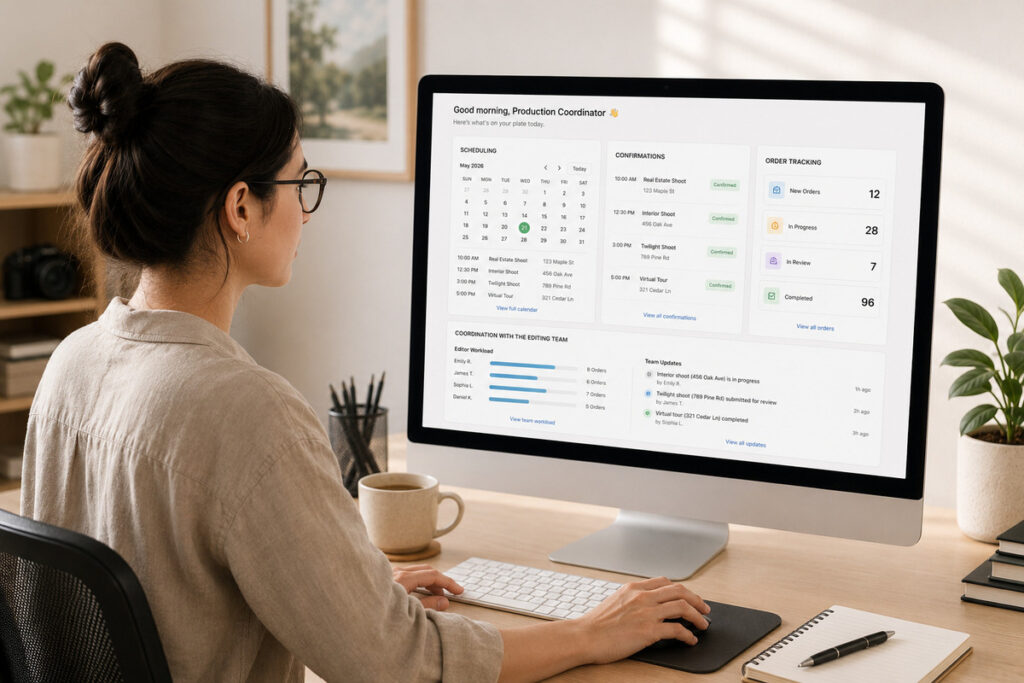
That’s where PhotoUp comes in. PhotoUp trains Coordinators: dedicated team members who own one side of a photography business rather than working a task list.
- Production Coordinators own booking to delivery: scheduling, confirmations, order tracking, coordination with the editing team, and client communication on logistics and revisions
- Growth Coordinators own lead to repeat client: CRM management, marketing and social media consistency, inquiry response, and follow-up
Both roles are trained across the entire function, not just the tasks you need today, so the role grows without renegotiation or re-onboarding. Coordinators are also trained on the AI tools reshaping photography workflows, which means your Coordinator runs your AI stack instead of competing with it.
The honest comparison with a VA: a Coordinator costs more than a $6-per-hour generalist, and it’s the wrong fit if you have five hours of loosely related tasks a week. The fit is a business with enough volume that production or growth needs a reliable owner. A VA checks the boxes you define. A Coordinator is responsible for the outcome.
Get the Right Support Behind the Camera
If your bottleneck is shoot day, hire a strong local assistant and don’t look back. If your bottleneck is everything around the shooting, PhotoUp can put a trained Coordinator behind your business.
Coordinator services include:
- Scheduling, booking, and client confirmations
- Order management and delivery tracking
- Client communication for logistics and revisions
- CRM setup, management, and lead follow-up
- Marketing and social media consistency
- AI-powered workflow management across editing, delivery, and marketing
Focus on Photography
We'll Handle the Rest
Save time with a dedicated PhotoUp Coordinator.
Why choose PhotoUp? PhotoUp has been the behind-the-scenes team for thousands of real estate photographers. Coordinators are trained specifically on photography business workflows, work as dedicated members of your team rather than multi-client freelancers, and are backed by PhotoUp’s editing and AI infrastructure.
How to get started:
- Book a call with the PhotoUp team
- Tell us where the work piles up, from booking to delivery to marketing
- Get matched with a Production Coordinator, a Growth Coordinator, or both
Determine whether you need production support, growth support, or both. Talk to PhotoUp about which Coordinator fits your studio.
References: