Table of Contents
- What Professional Photo Editing Services Actually Include
- What AI Has Actually Changed in the Editing Process
- Where Human Judgment Still Decides the Outcome
- Why the Editor’s Job Has Shifted From Retouching to Running the Workflow
- How to Evaluate Professional Photo Editing Services in the AI Era
- Run Your AI Editing Workflow With a PhotoUp Production Coordinator
A fast turnaround used to be the main thing a photo editing service could promise. That promise doesn’t mean much anymore, since AI now handles the first editing pass in minutes, not hours.
The tools changed. What “professional” means didn’t.
This article covers what professional photo editing services actually include, where AI has taken over real work, where it still needs a person watching it, and what that means for anyone deciding how their images get edited from here.
What Professional Photo Editing Services Actually Include
“Professional editing” gets used loosely. For real estate images specifically, it covers a defined set of tasks:
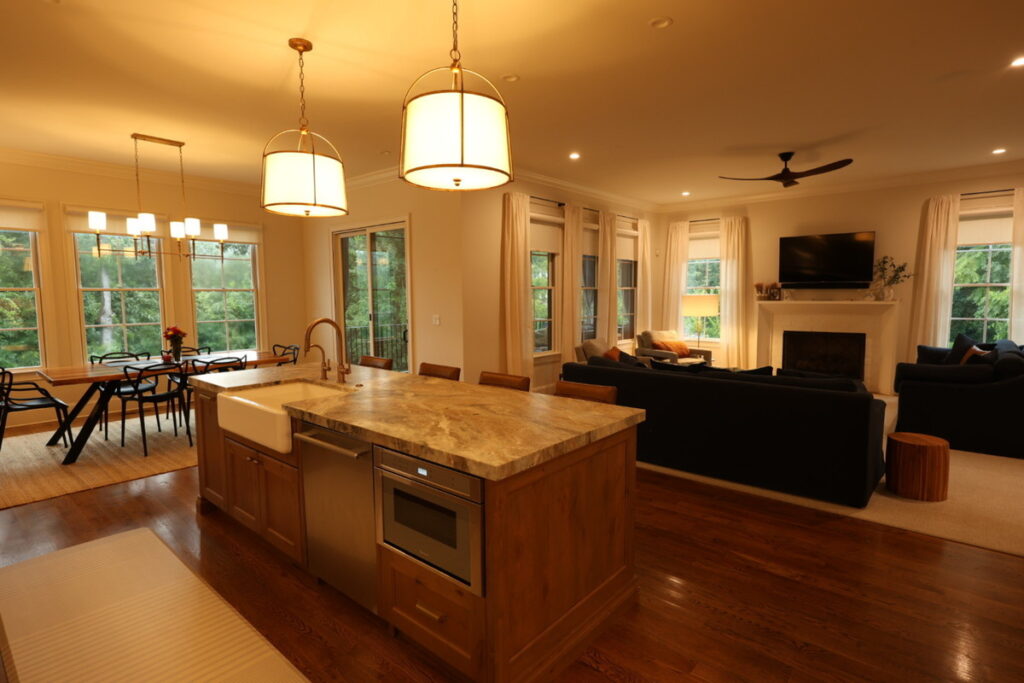
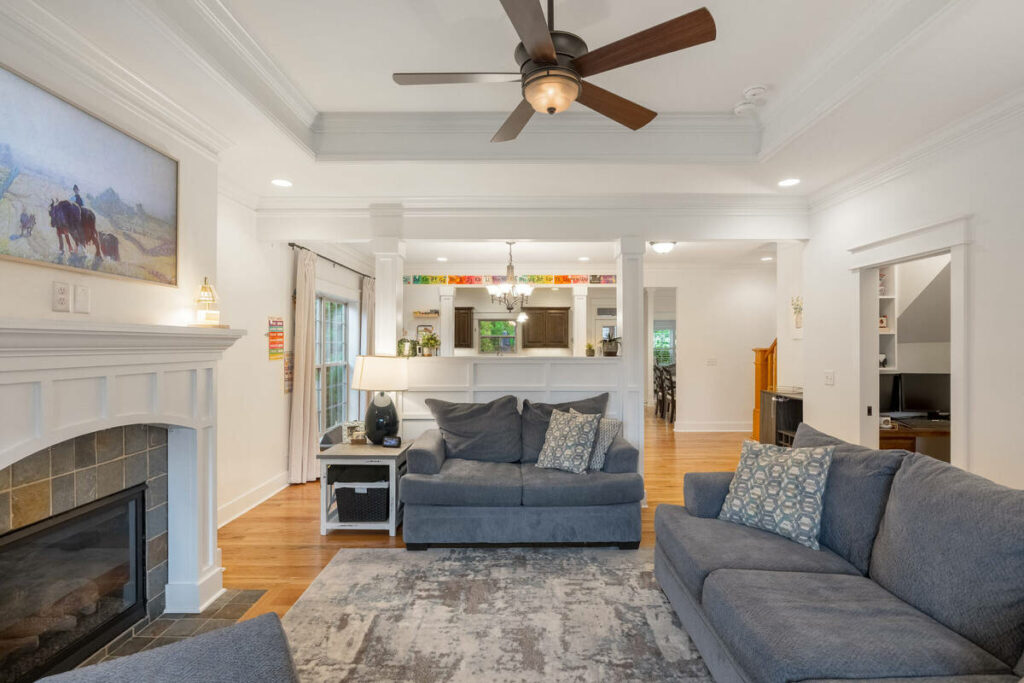
- Exposure and color correction across bracketed exposures, so interiors read true to the eye
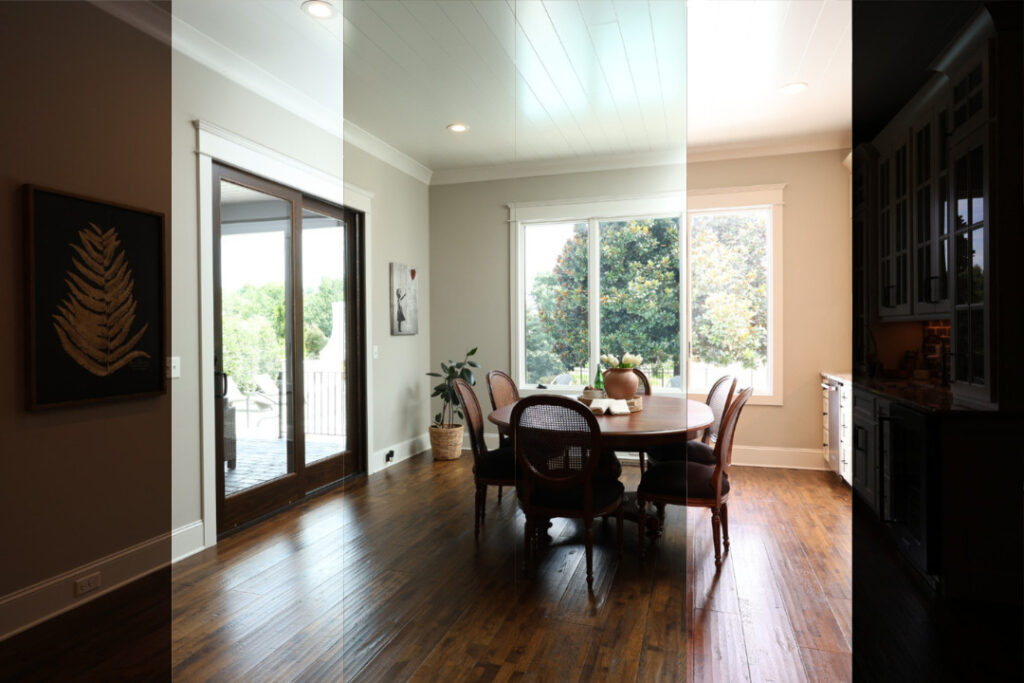
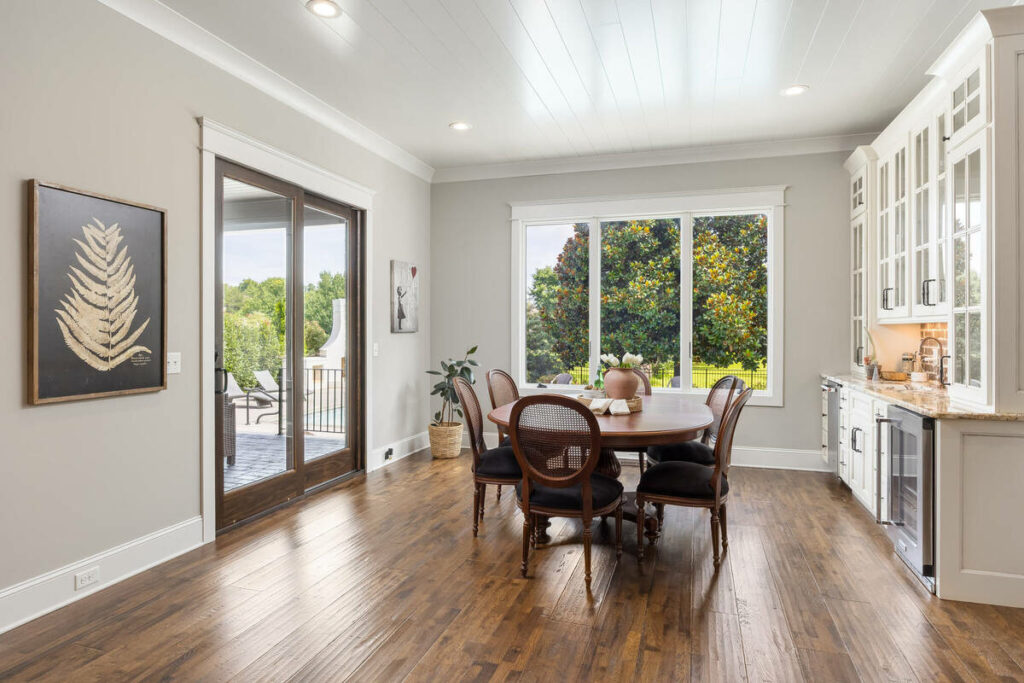
- HDR blending to balance bright windows with darker interior light


- Sky replacement on exteriors shot under flat or overcast conditions
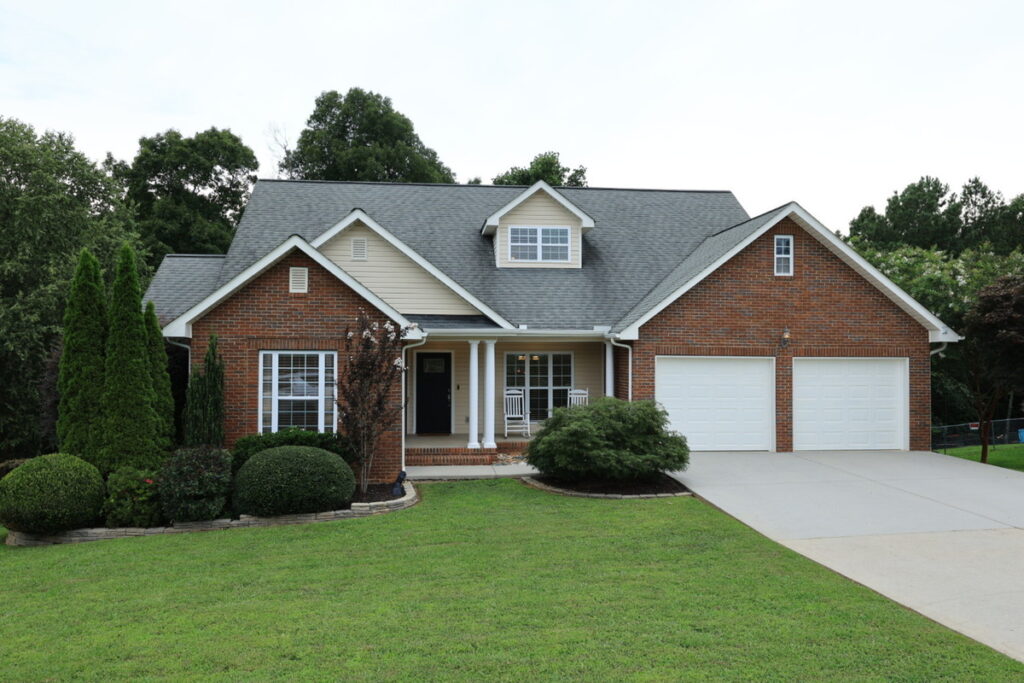

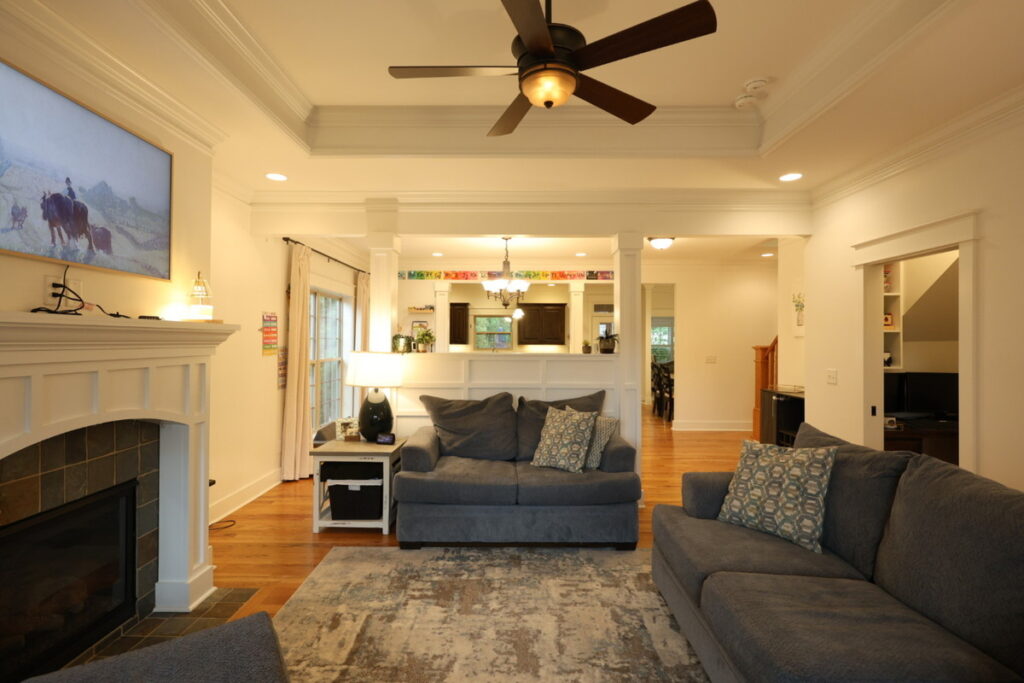
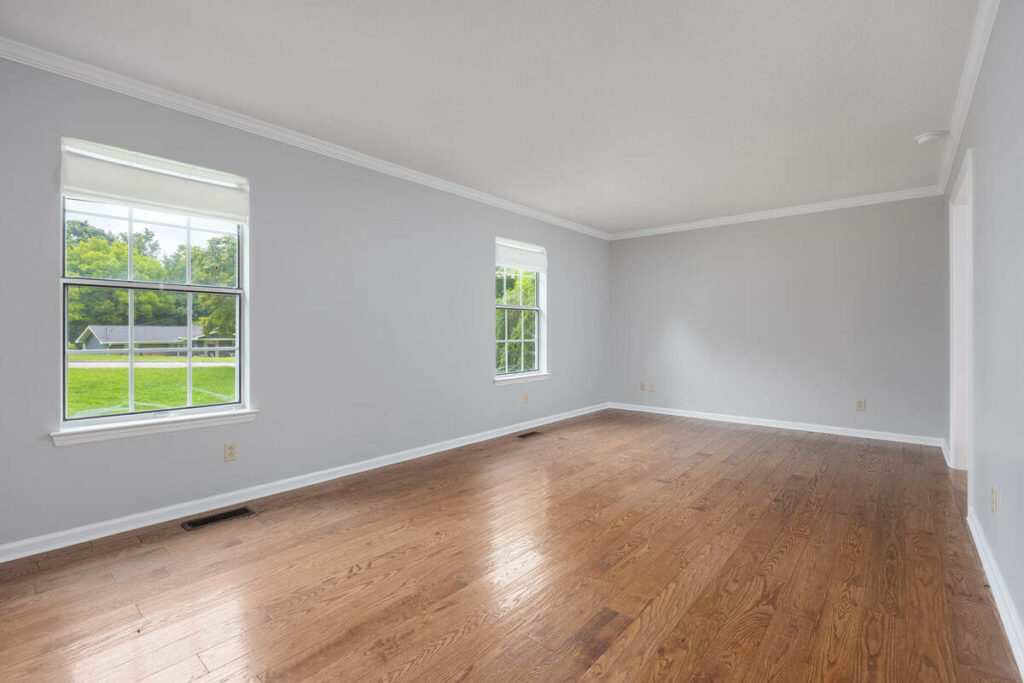
- Vertical and lens correction to straighten converging lines

- Object and clutter removal, from cords to trash cans to reflections
- Virtual staging or twilight conversion, when a shoot calls for it

None of that separates a professional service from someone doing this on the side. Consistency does: the same style across a batch, the same output across a team, delivery on deadline every time. One well-edited photo proves someone knows Lightroom. It doesn’t prove there’s a process behind the work.
That process is exactly where AI has changed the most.
What AI Has Actually Changed in the Editing Process
AI now handles the routine, rule-based parts of editing: exposure balancing, white balance on standard interiors, color-matching across a batch, HDR blending on clean shots, small-object removal, lens correction. No one has to open every file by hand.

Adoption backs it up. 68% of real estate agents now use AI in their business, per the NAR 2025 Technology Survey.1 65% of professional photographers use it in their workflow, per a 2025 WiFiTalents report.2
That’s a real shift in where the labor behind professional photo editing services goes. A 60-shot batch that took 90 minutes by hand now takes minutes, with an editor checking instead of doing. A 200-listing-a-week editing service needs fewer people touching every frame, just enough to review and catch exceptions. The review step just moves.
Focus on Photography
We'll Handle the Rest
Save time with a dedicated PhotoUp Coordinator.

Where Human Judgment Still Decides the Outcome
AI struggles precisely where real estate photography gets hard. Specific situations still need a trained editor, not a model:
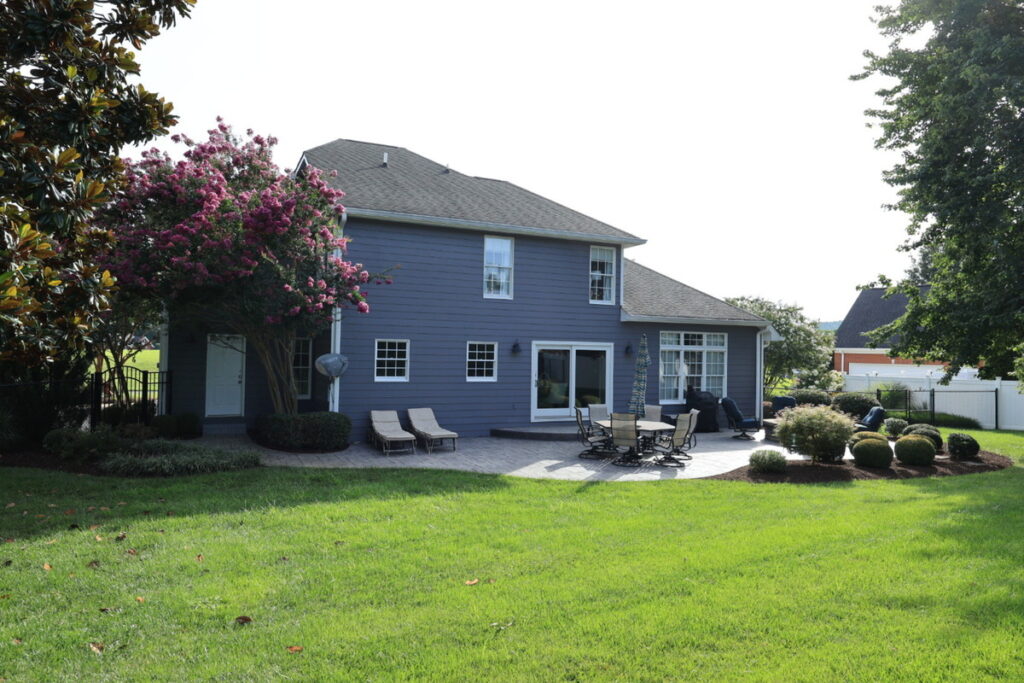
- Sky replacement with complex tree lines or irregular rooflines, where the mask has to follow an uneven edge exactly

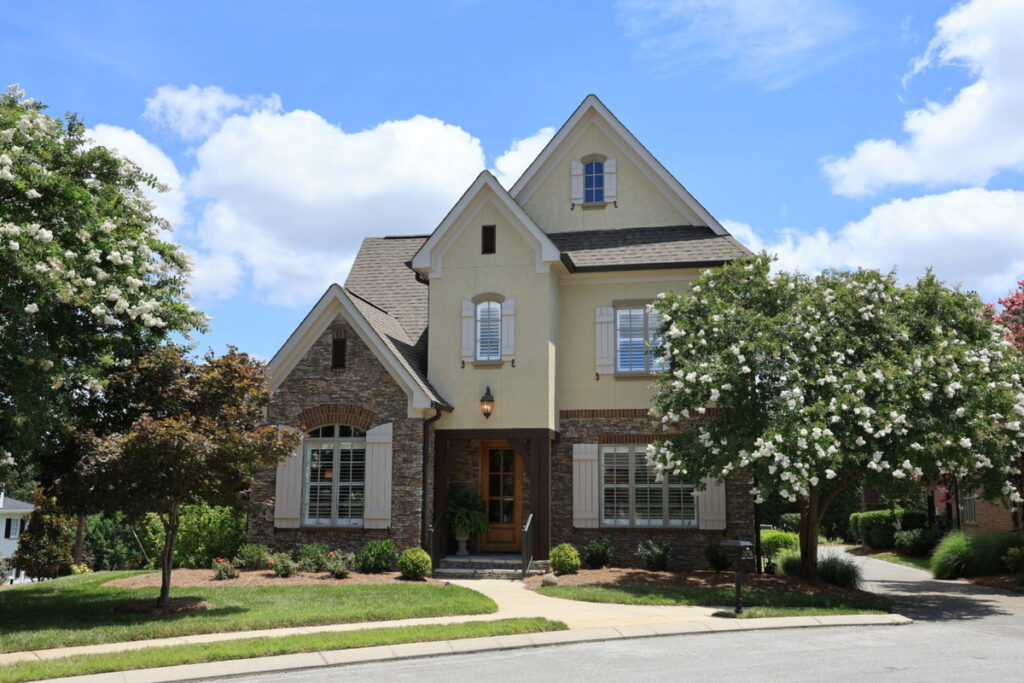
- Twilight and day-to-dusk conversion, which depends on artistic judgment about color and mood, not a formula


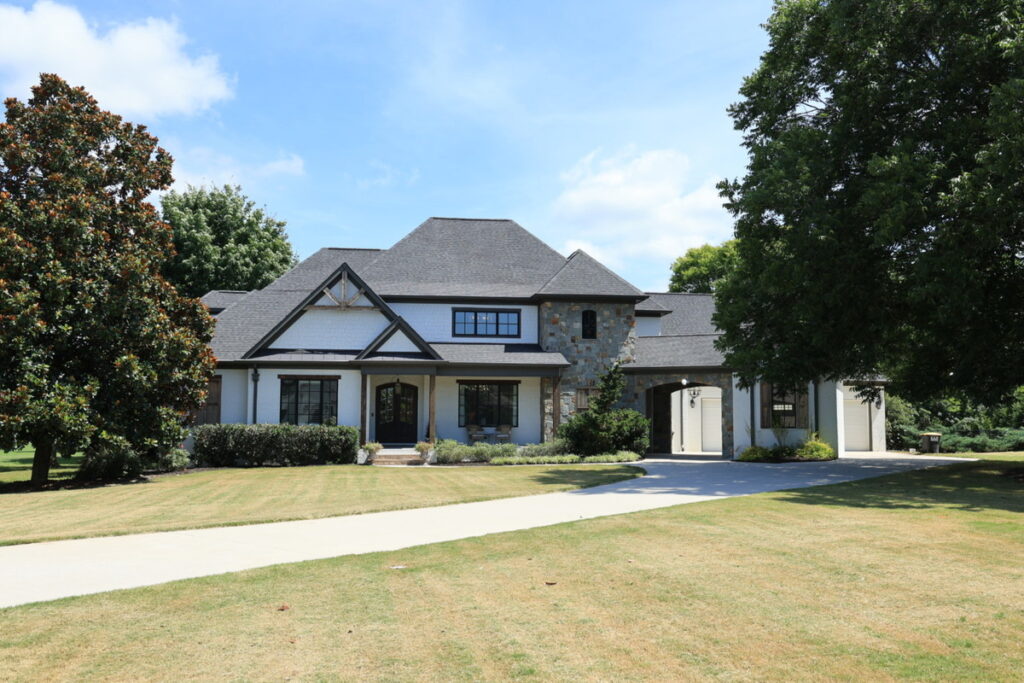
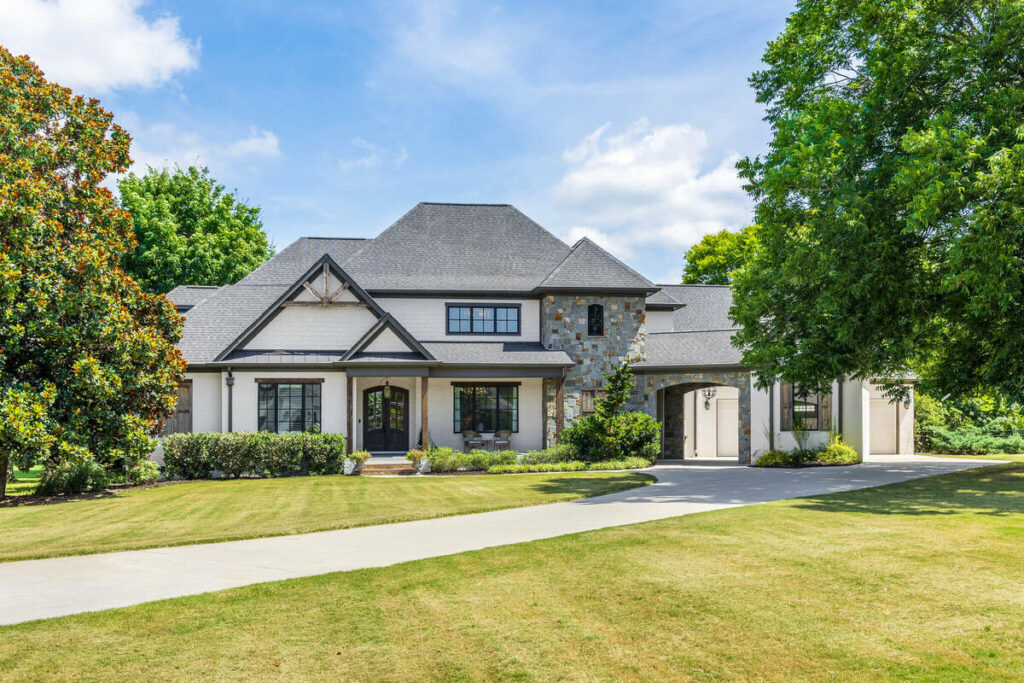
- Luxury listings, where the standard for subtlety is higher and small errors are more visible to a discerning client

- Mixed-light interiors that need local adjustments room by room, not one global correction




- Any shoot for a recurring client with a defined, non-standard quality expectation that a general model was never trained on
It’s a division of labor, not a competition. AI handles the 80% that’s consistent and foundational. A person catches the 20% that needs judgment or a client-specific standard. Neither “AI does everything” nor “AI can’t be trusted” matches what’s actually happening.
| Task | AI handles it | Still needs a person |
|---|---|---|
| Exposure balancing, standard brackets | Yes | Spot-check only |
| White balance, daytime interiors | Yes | Spot-check only |
| Batch color consistency, 30-80 images | Yes | Spot-check only |
| Basic object or clutter removal | Yes | Spot-check only |
| Sky replacement, clean tree lines | Mostly | Edge cases |
| Sky replacement, complex trees or rooflines | No | Full manual pass |
| Twilight or day-to-dusk conversion | No | Full manual pass |
| Luxury listings | Partial | Final review, always |
| Mixed-light interiors needing local edits | Partial | Full manual pass |
What that division of labor changes, though, isn’t just the editing. It changes what the editor’s job is.
Why the Editor’s Job Has Shifted From Retouching to Running the Workflow
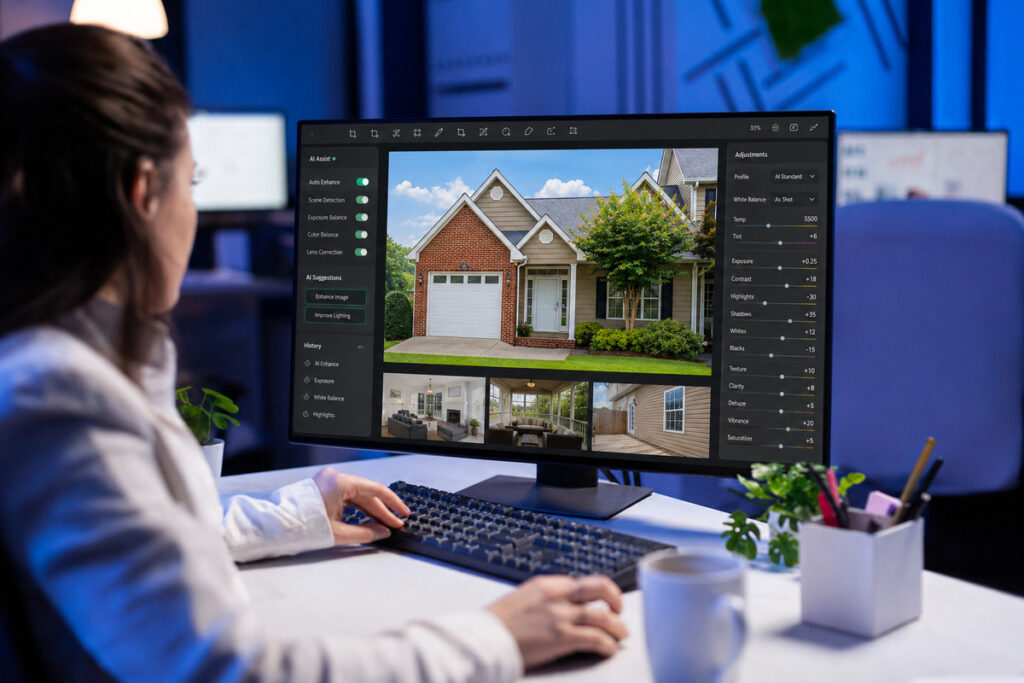
A few years ago, editing meant opening a file, correcting it, and moving to the next one, for hours. That’s not the job anymore in an editing service using AI well.
Today, the editor sets presets for a client or property type. They define what triggers a flag for review: a twilight shot, a luxury listing, unusual lighting. They spot-check batches for drift, since AI can quietly shift color over time. And they own the exceptions, the one image out of 60 that needs a manual fix.

That’s coordination work, not retouching work. The function has moved from “edits every pixel” to “runs the system and catches what it misses.” A team of three used to mean three people retouching in parallel. Now it might mean one person on hard cases full-time, while two run AI batches and manage exceptions.
This matters when choosing professional photo editing services. A provider built around manual retouching alone will be slower and less consistent than one built around AI plus a person managing it. Ask how the team is structured, not just whether they “use AI,” it says more.
What This Means for Turnaround Time and Delivery
Speed used to trade off against quality: faster editing meant a rushed or junior editor. AI broke that trade-off. It compresses the slowest part of the job without cutting the review step.
The business case is established. A VHT Studios analysis of Chicago listings found professionally photographed homes averaged 89 days on market versus 123, a 32% difference.3 Redfin found $400,000 homes with professional photos sold three weeks faster, for $3,400 to $11,200 more.4 Editing quality is part of what “professional photography” means here.
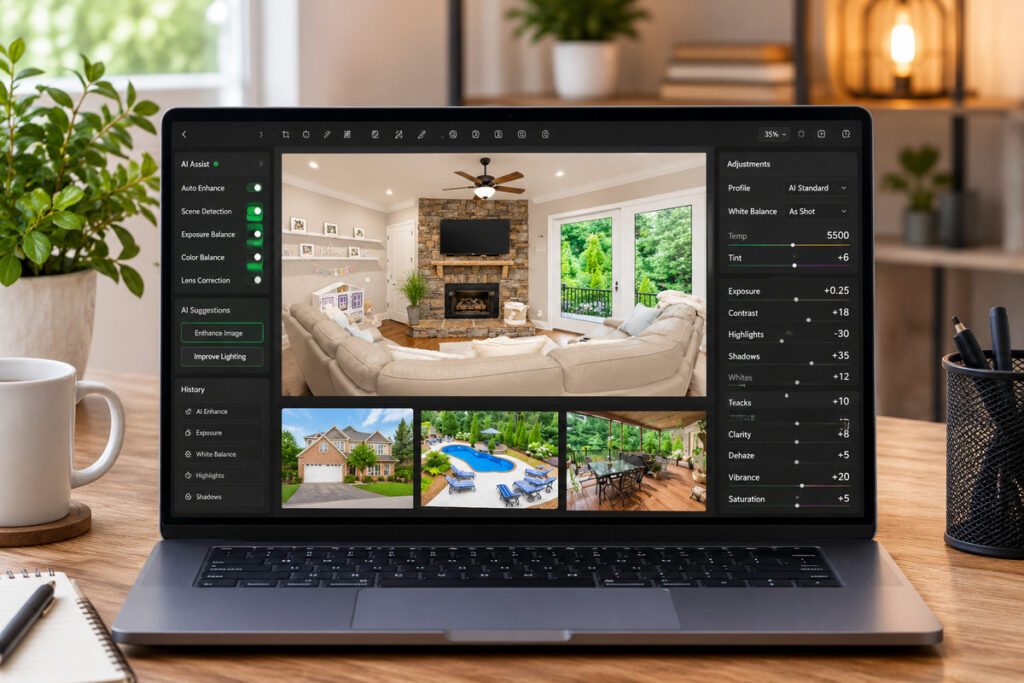
What’s changed is less about hours, more about expectations. Same-day or next-morning turnaround is now standard for straightforward listings. Twilight, virtual staging, and unusual lighting still take longer, since those need careful manual work.
Take three listings due Tuesday morning. An AI-plus-review editing service turns standard shots around the same day, saving time for the twilight property. A fully manual editing service spreads that same time across all three: something waits, or gets rushed.

How to Evaluate Professional Photo Editing Services in the AI Era
Whether or not a photographer ever works with PhotoUp, a few questions cut through most of the marketing around “AI-powered editing”:
- Is there an actual human review gate, or does every image ship straight from the model? Ask specifically, not just “do you use AI.”
- How are non-standard shots handled? Twilight, luxury, mixed light. If the answer is vague, that’s usually where quality breaks down first.
- What’s the real turnaround, in hours, not adjectives? “Fast” isn’t a service level. A specific number is.
- Who’s accountable when volume spikes? A shoot-heavy week in spring should get the same quality as a slow week in December. If quality depends on how busy the provider is that day, the process isn’t built for it yet.
These four questions apply whether the photographer self-edits, outsources to a freelancer, or works with a full-service company. They’re a quick gut check for telling a real AI-plus-human process from an AI label slapped on the same old workflow.

One more test: ask what happens when their AI gets something wrong. A real process has a ready answer, who catches it, how fast, what the client sees. Without one, the conversation drifts back to the software.
The answers point to the same conclusion: quality today depends less on the software and more on who’s running it, and how well.
Run Your AI Editing Workflow With a PhotoUp Production Coordinator
PhotoUp’s professional photo editing services already run on this model: AI handles the consistent, high-volume corrections, and trained editors catch what it can’t. A Production Coordinator ties that process together.
Browse Top Dedicated
Real Estate Photo Editors
Ready-to-hire editors for real estate photo editing, and more.
A Production Coordinator isn’t a freelancer juggling other clients on the side, and they’re not a general virtual assistant checking items off a list. They’re a dedicated team member trained across the full production function:
- Scheduling and client booking, including appointments, confirmations, and rescheduling
- Order management and delivery, tracking every job and flagging turnaround issues before a client notices them
- Client communication on logistics, from status updates to revision requests
- AI-powered editing workflow management, running the same AI tools covered in this article so the pipeline stays fast without losing the review step
Why do photographers work with PhotoUp? The editing team already understands real estate photography specifically, not photo editing in general, and the Coordinator role means one dedicated person owns the process end to end instead of a rotating queue of freelancers.
Focus on Photography
We'll Handle the Rest
Save time with a dedicated PhotoUp Coordinator.
Getting started is a short process:
- Talk through your current workflow and where the bottlenecks are
- Get matched with a Production Coordinator trained for your volume and property types
- Set the standards, turnaround expectations, and review rules together
- Run a test batch to confirm quality and speed
- Hand off the day-to-day so editing runs without you managing it
Need help running your AI editing workflow? A Production Coordinator sets it up, reviews the output, and catches what the AI misses. Start with a test batch today.
Related Articles:
- AI Real Estate Photo Editing: What Can It Actually Fix?
- What Can a Photography Coordinator Take Off Your Plate?
- Photography Virtual Assistant: More Than Just Photo Editing
- How to Choose the Right AI Photo Editing Software for Your Workflow
- Real Estate Photo Editing AI in 2026: Trends, Tips, and Best Practices
References: