Table of Contents
- Why This Comparison Isn’t as Simple as It Looks
- What an In-House Photo Editor Actually Costs
- What Outsourced Photo Editing Actually Costs
- The Third Option Most Comparisons Miss
- Find the Right Editing Support for Your Studio
Cheaper isn’t always the right question. A $1.50-per-image editing service looks like an easy win against a full-time salary, until a slow month makes the salary look wasteful and a busy month makes the per-image rate add up fast.
The real comparison is about risk and control, not just price per photo.
This breaks down the real price of an in-house editor, what it takes to outsource photo editing, and where each option falls short of what a studio actually needs.
Why This Comparison Isn’t as Simple as It Looks
Most photographers frame this as in-house editor versus outsourced service, full stop. That framing misses the variable that decides which one actually works: how much your editing volume swings month to month, and how much control you need over the final look.
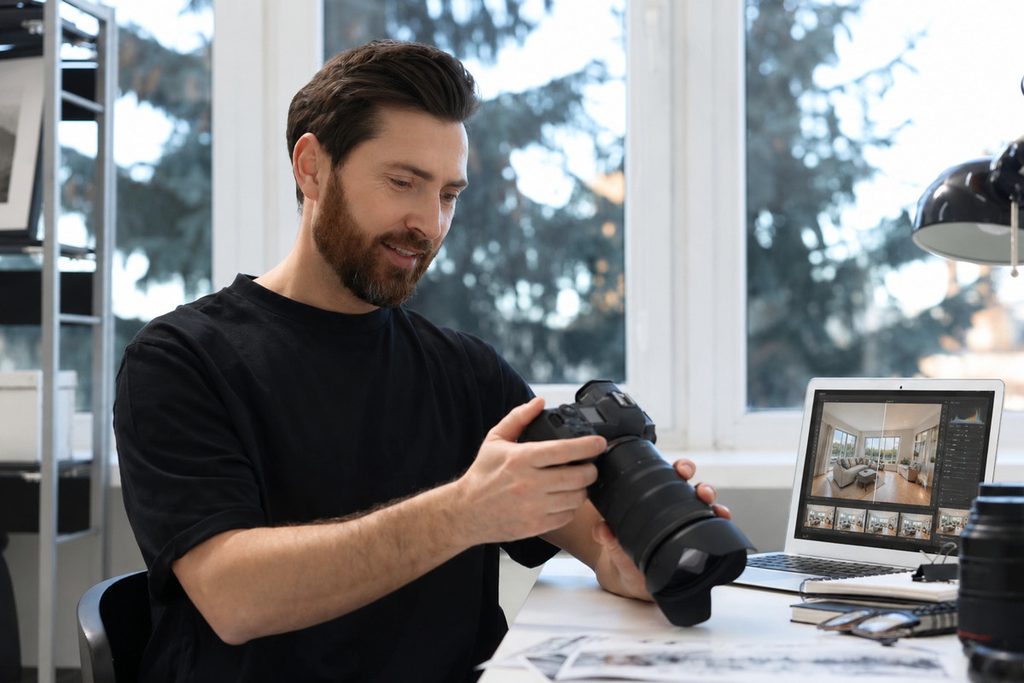
A studio with steady, predictable volume has different math than one that triples during spring listing season and goes quiet in December. Neither option is universally cheaper or better. Each one trades differently against volume and control.
What an In-House Photo Editor Actually Costs
The salary line is only the starting point. A photo editor or retoucher in the U.S. earns an average of $70,561 a year, with a typical range between $57,000 and $79,500 for the middle half of the market.1
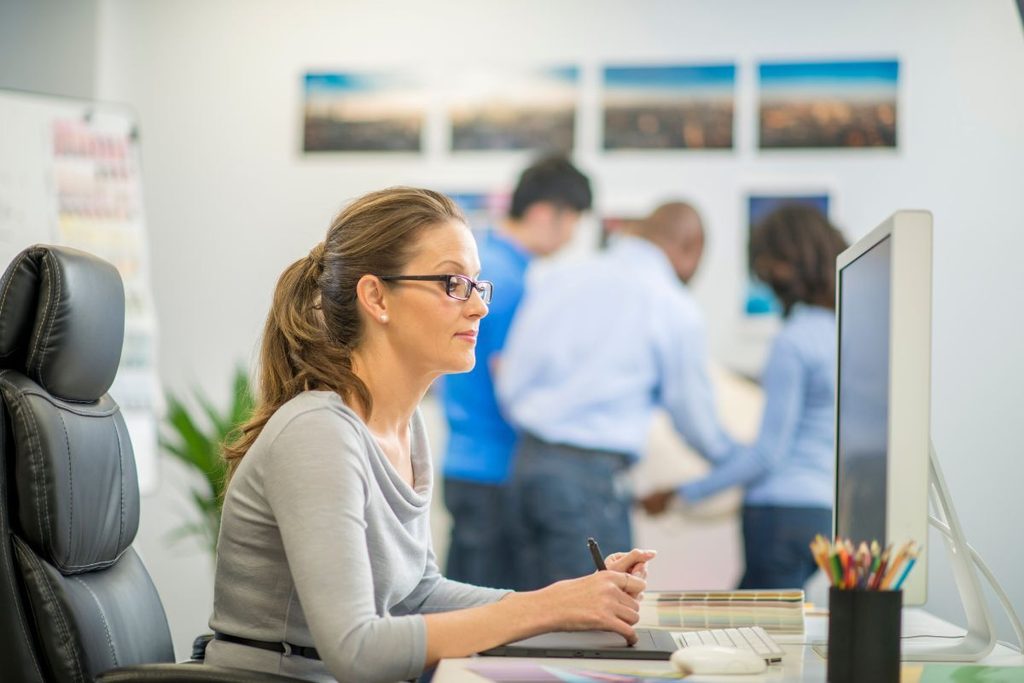
Salary isn’t the full cost. The standard method for calculating fully-loaded employee cost, developed by MIT senior lecturer Joseph Hadzima, puts the real number at 1.25 to 1.4 times base salary once payroll taxes and standard benefits are included.2 Applied to a $70,561 salary, that’s roughly $88,000 to $99,000 a year before a single photo is edited.
That figure still doesn’t include recruiting time, onboarding, software licenses, a workstation, or what happens to turnaround during the two weeks a new hire takes to reach full speed. It also doesn’t shrink during a slow month. An in-house editor costs the same in January as in May, whether there are 50 listings to edit or 500.
What Outsourced Photo Editing Actually Costs
When you outsource photo editing, pricing scales with volume instead of staying fixed. On-demand editing typically runs around $1.50 per image, dedicated arrangements can drop to $0.50, and advanced edits can reach $9 per image.

Run the math at a moderate studio volume, say 1,000 images a month. At the dedicated rate, that’s roughly $500 to $1,000 monthly, somewhere between $6,000 and $12,000 a year. Compare that to $88,000 to $99,000 for a single in-house hire, and the gap is substantial even before accounting for hiring risk.
The trade-off shows up on the other side: outsourcing removes the fixed cost, but it also removes the dedicated attention a full-time hire provides by default.
Focus on Photography
We'll Handle the Rest
Save time with a dedicated PhotoUp Coordinator.

What Each Option Actually Gives You Beyond Cost
In-house wins: full control over the day-to-day editing process, someone physically available to answer questions or handle a rush job, and deep familiarity with a studio’s exact style built up over time.
In-house gaps: the cost doesn’t flex with volume, so slow seasons still carry full payroll. One person is also a single point of failure: a sick week, a vacation, or turnover means editing either stalls or falls back on the photographer.
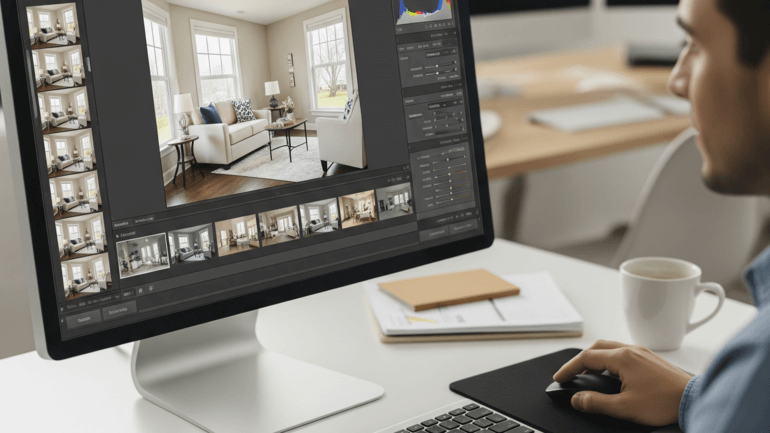
Outsourced wins: costs scale directly with volume, there’s no hiring or training cycle to manage, and a studio gets access to editors already trained on real estate-specific workflows from day one.
Outsourced gaps: day-to-day control depends entirely on how well the workflow and quality standards are defined upfront. Without a clear process and a quality-check step, consistency can slip, and communication happens through a delivery pipeline rather than in person.
In-House Editor vs. Outsource Photo Editing: Side-by-Side
| In-House Editor | Outsourced Editing | |
|---|---|---|
| Annual cost (moderate volume) | ~$88,000–$99,000 fully loaded | ~$6,000–$12,000 at dedicated rates |
| Scales with volume | No, fixed regardless of workload | Yes, cost tracks output |
| Hiring and onboarding time | Weeks to find and train | Immediate, provider already trained |
| Quality control | Direct, in-person oversight | Dependent on defined process and QA step |
| Risk of downtime | Single point of failure | Distributed across a team |
| Management overhead | Payroll, benefits, performance management | Workflow management, not HR management |
The Third Option Most Comparisons Miss
Most versions of this comparison stop at two options, as if it’s a binary choice between full payroll and a faceless editing queue. There’s a third model that takes the strongest part of each side.
Outsourced editing paired with a dedicated Production Coordinator gets a studio the scalable cost structure of outsourcing along with the control and consistency usually associated with an in-house hire.
Browse Top Dedicated
Real Estate Photo Editors
Ready-to-hire editors for real estate photo editing, and more.
The Coordinator implements the AI-plus-human editing workflow, sets the quality standard, and is the human checkpoint that catches what shouldn’t be approved without review, all without the studio carrying a full-time salary regardless of season.
It’s not outsourcing left to run unsupervised, and it’s not the fixed overhead of a full-time employee. It’s a dedicated person who owns the outcome, priced closer to the outsourced side of this comparison than the in-house side.
Find the Right Editing Support for Your Studio
If in-house feels expensive and outsource photo editing feels uncertain, a Production Coordinator closes the gap. A Coordinator owns:
| The AI-plus-human editing workflow, from setup to the human QA check on every batch |
| Order management and delivery, so turnaround stays consistent regardless of volume |
| Scheduling and client communication tied to editing timelines |
| A single point of contact instead of a rotating queue |
Why work with a PhotoUp Coordinator? Every Coordinator is trained specifically on real estate photo editing workflows, not general photo editing. You get one dedicated person who owns quality and turnaround, backed by an AI-plus-human process instead of automation running without a check.
Focus on Photography
We'll Handle the Rest
Save time with a dedicated PhotoUp Coordinator.
How to get started:
- Share your current volume and where quality or turnaround has been inconsistent
- Get matched with a Production Coordinator trained on real estate photography editing standards
- Have a defined workflow with built-in QA running within the first two weeks
Explore dedicated business support.
Related Articles:
- What Can a Photography Coordinator Take Off Your Plate?
- When Should Photographers Outsource Photo Editing?
- What Professional Photo Editing Looks Like in the Age of AI
- Why Photographers Need a Production Coordinator for AI Photo Editing Workflows
- How Human QA Catches What AI Photo Editing Misses in Real Estate Photos
References: