Table of Contents
- What “Fast” Actually Means: The Standard Timeline
- Why a “24-Hour Turnaround” Promise Doesn’t Always Hold
- What a Reliable Turnaround Process Looks Like
- Turnaround You Can Actually Count On
Ask an agent what actually annoys them about a photo editing vendor, and quality rarely comes up first. Timing does.
A photo that’s technically perfect two days late doesn’t help a listing that needed to go live yesterday.
Here’s what real estate photography turnaround time actually looks like across the industry, what changes it, and how to tell a real promise from a padded one.
What “Fast” Actually Means: The Standard Timeline
Zillow’s own guidance to agents on choosing a photographer points to a one-to-three day turnaround as the expected standard, noting that delays can leave a listing lagging competitively in the market.1
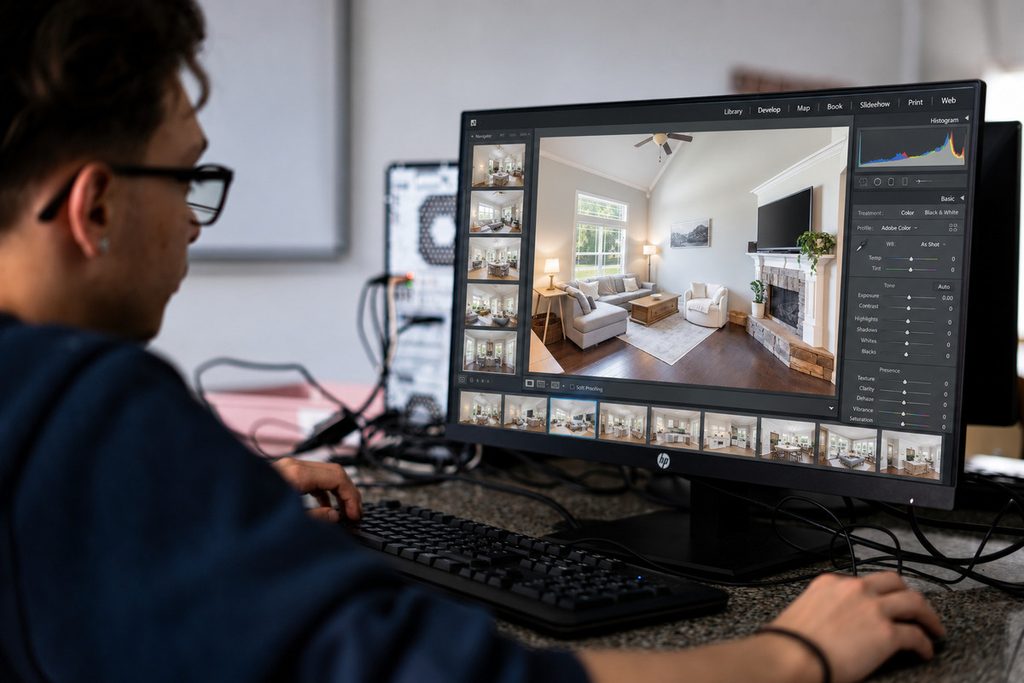
Within that window, turnaround varies by what’s being delivered. Standard HDR stills typically land within 24 to 36 hours, floor plans usually within 24 hours, twilight and dusk conversions in the 24-to-48-hour range, and video or 3D tours in 48 to 72 hours given the heavier processing they require.2
What Affects How Fast Editing Actually Gets Done
Not every batch takes the same amount of work, which can affect real estate photography turnaround time. A straightforward HDR blend moves through editing faster than a twilight conversion or full virtual staging pass because those edits require more judgment to get right.
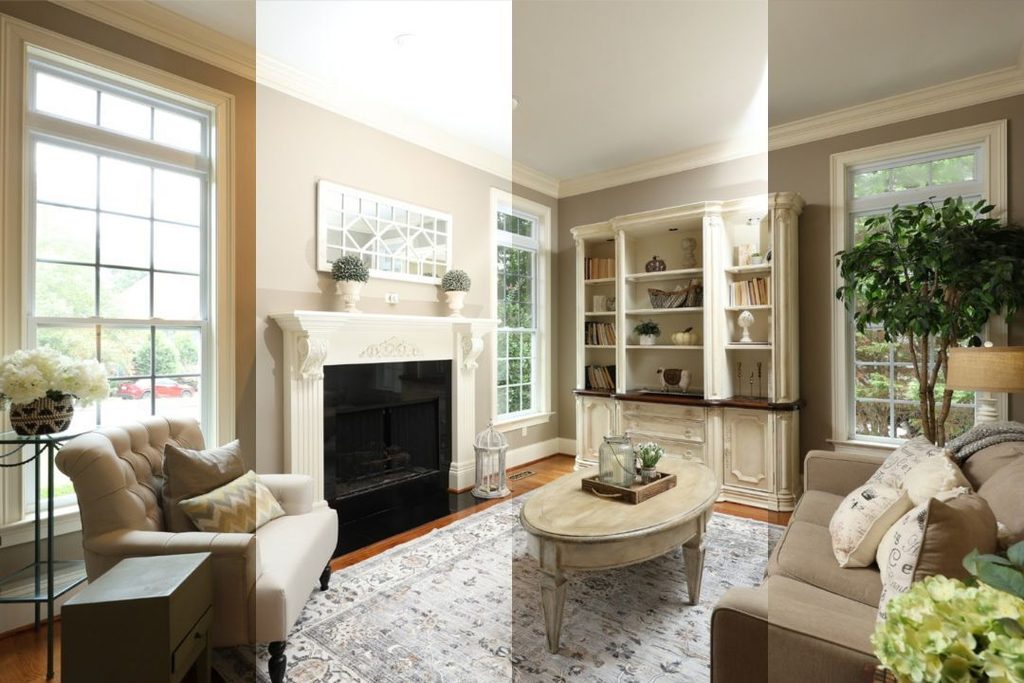
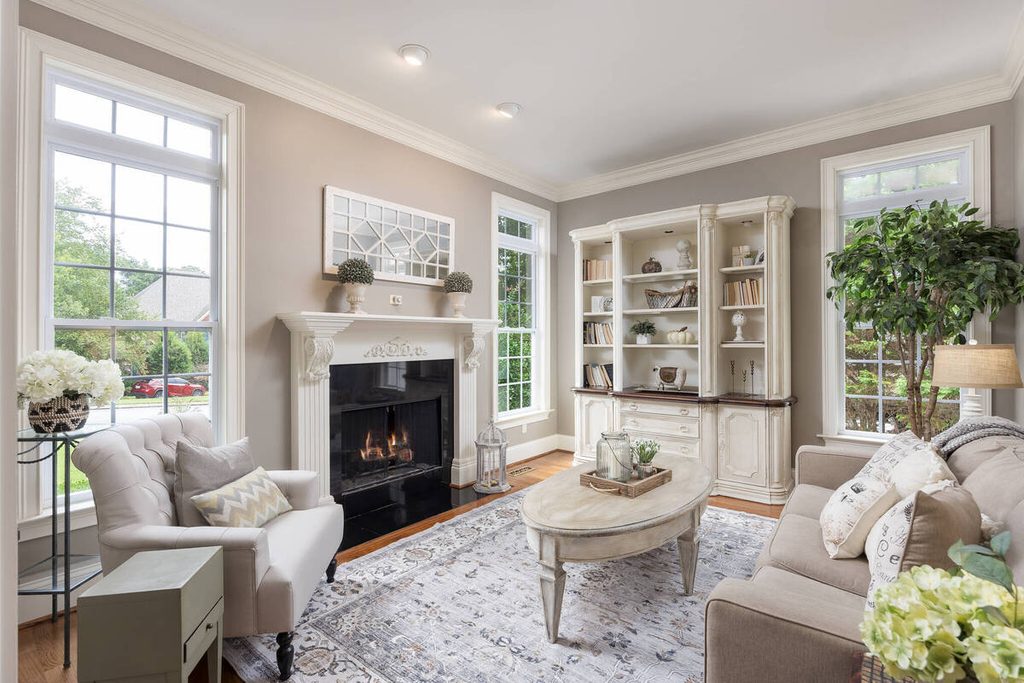
Volume matters just as much. A vendor with dedicated editing capacity holds its timeline during a busy spring stretch. One running on a general queue slows down exactly when speed matters most, because everyone’s batch is competing for the same limited attention.
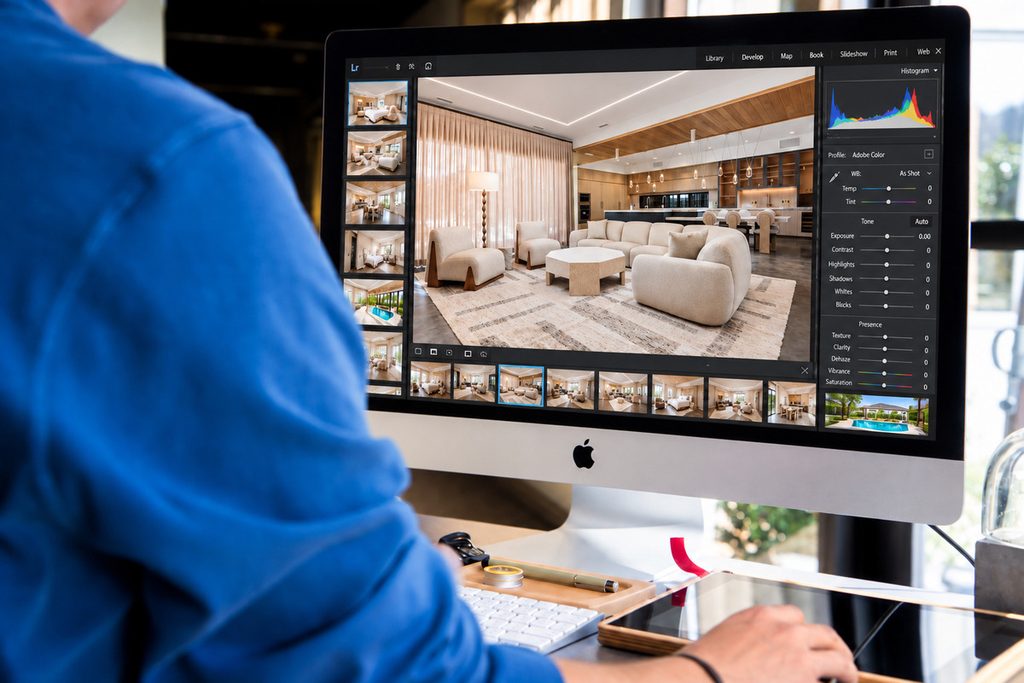
Whether there’s a defined quality-check step also shapes turnaround. A batch that gets reviewed against a real standard before delivery takes slightly longer than one that doesn’t, but it also means fewer revision rounds afterward, which is usually the faster path overall.
Why a “24-Hour Turnaround” Promise Doesn’t Always Hold
Almost every editing vendor advertises fast turnaround. Far fewer can say what happens to that promise once volume climbs.
A 24-hour timeline quoted on a light sample order and a 24-hour timeline during the busiest week of spring listing season aren’t always the same thing. If a vendor can’t describe what changes during peak volume, that’s worth asking about directly before committing, not after a gallery shows up late. How to choose a real estate photo editing company covers this question in more detail, along with the rest of what separates a reliable vendor from a risky one.
Focus on Photography
We'll Handle the Rest
Save time with a dedicated PhotoUp Coordinator.

What Slower-Than-Expected Turnaround Actually Costs You
A late gallery isn’t just an inconvenience. It’s a listing that goes live a day or two behind a comparable one in the same neighborhood, during the exact window when buyer attention is highest.

It also costs something less visible: trust. An agent who gets burned once on turnaround starts hedging, building in extra buffer time before every listing date, or quietly shopping other vendors. That erosion happens quietly, the same way missed follow-up quietly costs referral business over time.
What a Reliable Turnaround Process Looks Like
Consistent turnaround isn’t an accident. It comes from a defined process: every job tracked from shoot to delivery, a real person checking quality before anything goes out, and status updates that go out before an agent has to ask for one.
Browse Top Dedicated
Real Estate Photo Editors
Ready-to-hire editors for real estate photo editing, and more.
That’s specifically what a dedicated Production Coordinator owns for a studio, tracking each order and flagging anything at risk of missing its window, whether it’s a slow week or the busiest week of spring.
Real Estate Photo Turnaround Time by Service Type
| Deliverable | Typical Turnaround |
|---|---|
| Standard HDR photos | 24–36 hours |
| Floor plans | Within 24 hours |
| Twilight / dusk conversion | 24–48 hours |
| Virtual staging | 24–48 hours, depending on batch complexity |
| Video / 3D tour | 48–72 hours |
These ranges reflect general industry standards for real estate photography turnaround time. A vendor with a defined quality process and dedicated capacity should stay on the faster end, even during busy periods.
Turnaround You Can Actually Count On
If turnaround has been the inconsistent part of working with an editing vendor, a Production Coordinator closes that gap. A Coordinator owns:
| Order tracking from shoot to delivery, with anything at risk of missing its window flagged early |
| A human quality check on every batch before it goes out, not just a queue |
| Consistent turnaround whether it’s a slow week or the busiest week of spring |
| Status updates handled before you have to ask for one |
Why work with a PhotoUp Coordinator? Every Coordinator is trained specifically on real estate photography workflows, with an AI-plus-human process built for consistent turnaround at volume, not just on a sample order.
Focus on Photography
We'll Handle the Rest
Save time with a dedicated PhotoUp Coordinator.
How to get started
- Share your current turnaround pain points and where timing has slipped before
- Get matched with a Production Coordinator trained on real estate photography workflows
- Have consistent, tracked turnaround running within the first two weeks
Get turnaround you can count on.
Related Articles:
- How to Choose a Real Estate Photo Editing Company
- What Does a Production Coordinator Do for Photographers?
- Dodge and Burn for Real Estate Interiors: Where AI Speeds Up the Manual Work
- Why Photographers Need a Production Coordinator for AI Photo Editing Workflows
- What Can a Photography Coordinator Take Off Your Plate?
References: