Table of Contents
- What AI Real Estate Photo Editing Actually Does
- Where AI Delivers Real Value in Your Workflow
- Building a Hybrid Workflow That Holds Up at Scale
- How PhotoUp Can Help You Build That Workflow
Real estate photographers are under constant pressure to deliver more images, faster, without sacrificing quality. As listing volumes climb and turnaround times shrink, the old post-production workflows are starting to show their limits—and AI real estate photo editing is quickly becoming part of the solution.
AI-powered tools automate tasks like sky replacement, object removal, and color correction, speeding up workflows. But creating natural, accurate images that showcase a property still requires a skilled editor’s eye.
So the real question isn’t whether to use AI—it’s how to use it well. In this guide, we’ll break down where AI adds real value in real estate photo editing, where it falls short, and why the best results usually come from pairing AI efficiency with human expertise.
What AI Real Estate Photo Editing Actually Does
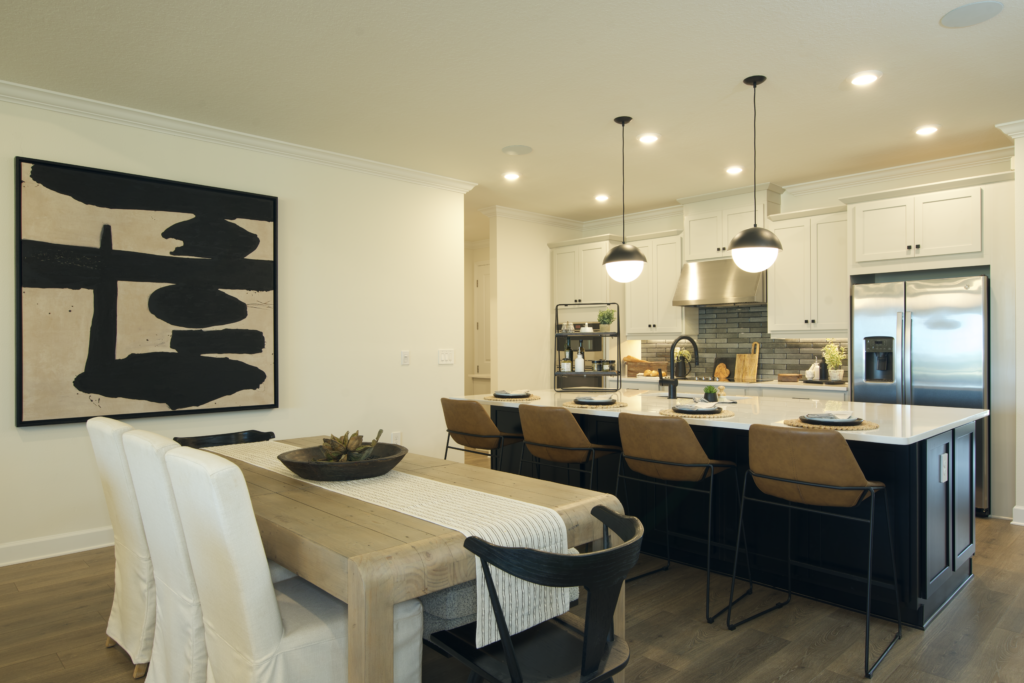
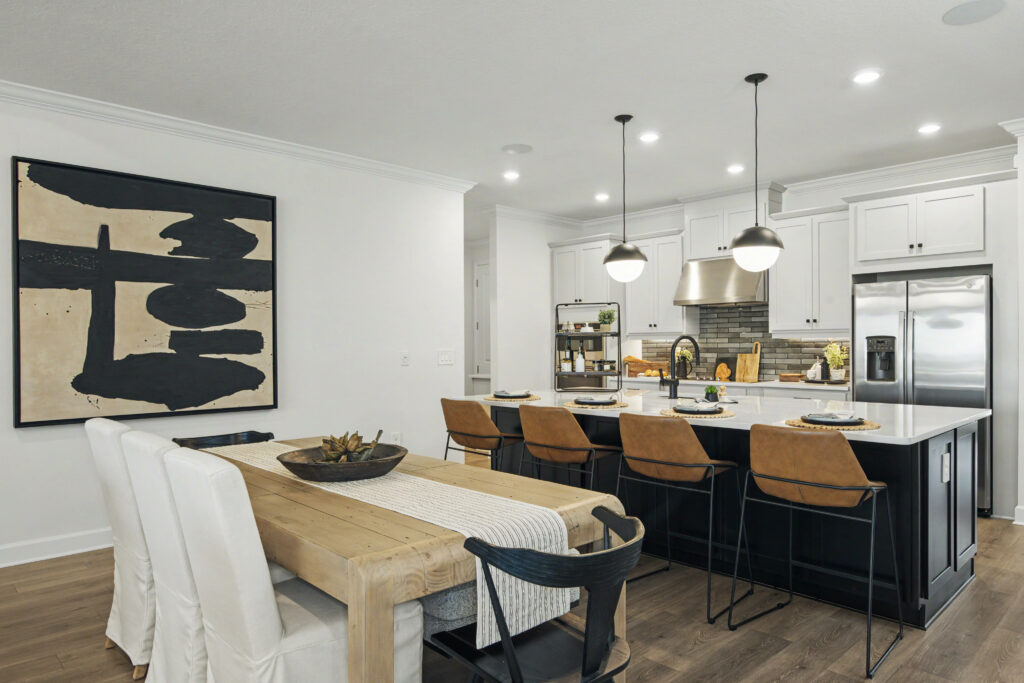
AI photo editing for real estate isn’t a single tool — it’s a category of software that uses machine learning to automate the adjustments photographers and editors would otherwise make by hand.
Most platforms are trained on large datasets of edited listing photos. They learn to recognize common patterns: overexposed windows, color casts from mixed interior lighting, bracketed exposure sets that need blending. When you upload a shot, the AI applies corrections based on those learned patterns rather than a fixed set of rules.
That makes it meaningfully different from a Lightroom preset or a batch export action. AI editing adapts to each image — reading the exposure, color temperature, and dynamic range of every shot individually. The result is faster than manual editing and more consistent than a blanket preset applied across varying room conditions.
Where AI Delivers Real Value in Your Workflow
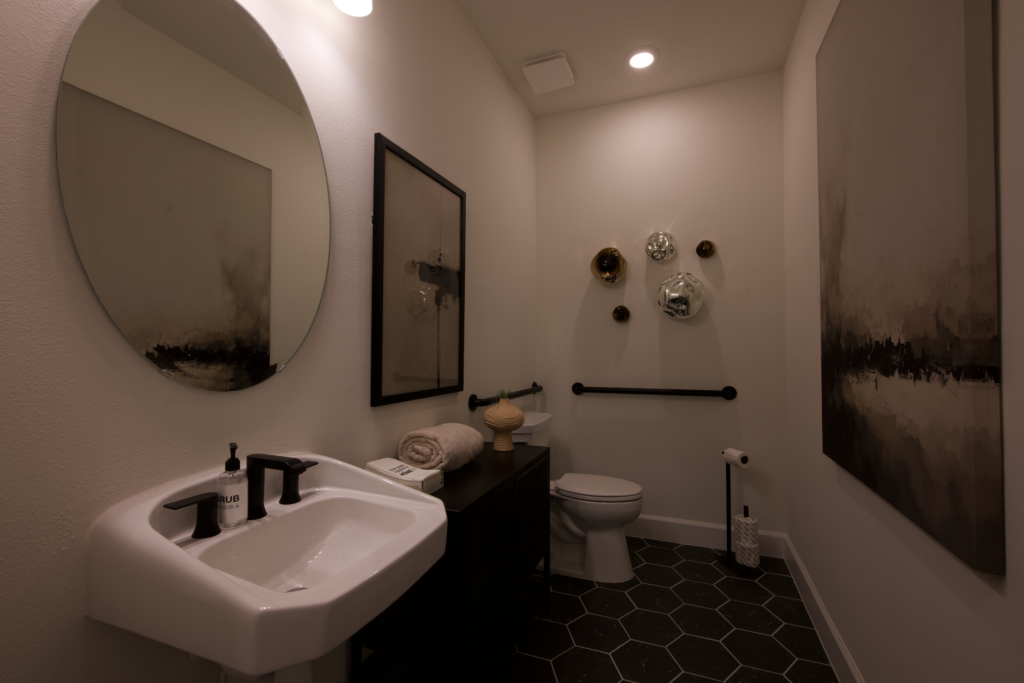
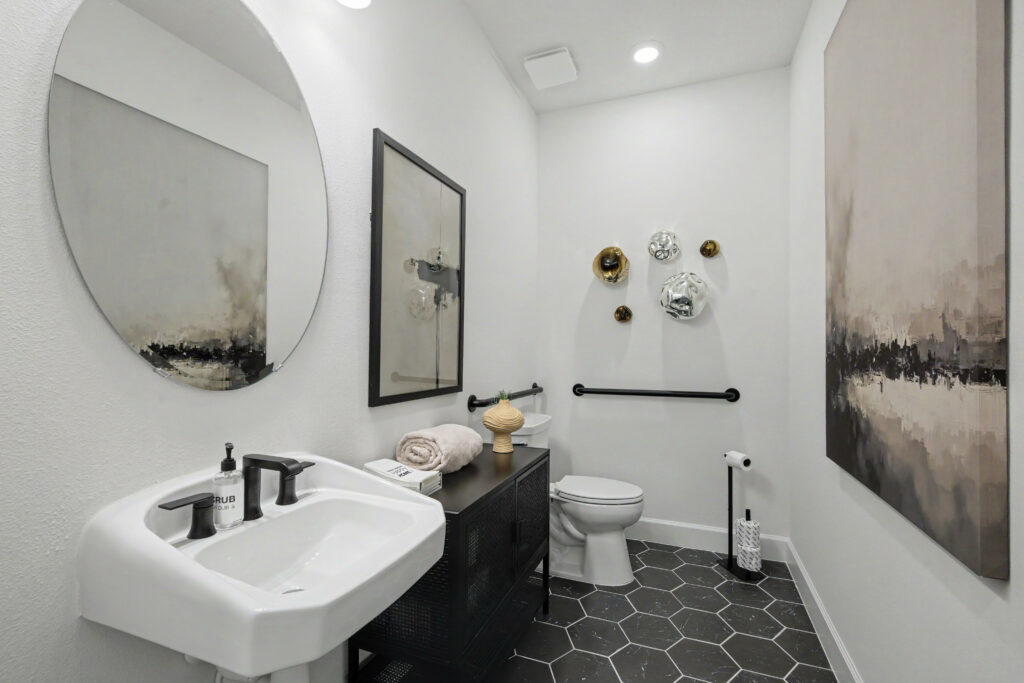
These are the tasks where AI real estate photo editing consistently produces results you’d approve without significant intervention.
Exposure balancing across bracketed sets
For standard daytime interiors shot in HDR, AI blending has become genuinely capable. The software identifies the best exposure for the sky, walls, floor, and fixtures, then blends them into a balanced final image. On clean, standard shots, this is where AI earns its keep most clearly.
White balance correction
Mixed lighting is one of the most consistent headaches in real estate photography — tungsten recessed cans, natural window light, and an overhead fluorescent all in the same frame. AI tools have gotten reliable at identifying and correcting white balance under standard shooting conditions.
White balance correction
Mixed lighting is one of the most consistent headaches in real estate photography — tungsten recessed cans, natural window light, and an overhead fluorescent all in the same frame. AI tools have gotten reliable at identifying and correcting white balance under standard shooting conditions.
Batch color consistency across a full listing set
When you’ve shot 40–60 images across a property, maintaining consistent tone, saturation, and color across every room is time-consuming to do manually. AI handles this well, treating the full set as a unit rather than processing each image in isolation.
Basic object removal
Small distractions — a power strip on the floor, a smudge on a wall, a light switch plate that didn’t clean up in post — are handled accurately by most current AI tools.
Lens and perspective correction
Converging verticals and barrel distortion are well-understood problems. AI correction is fast and reliable here.
What these tasks share: they’re technically defined, follow consistent patterns, and don’t require contextual judgment about a client’s quality standard. That’s where AI excels — and it’s also where the time savings add up fast.
Lens and perspective correction
Converging verticals and barrel distortion are well-understood problems. AI correction is fast and reliable here.
Basic object removal
Small distractions — a power strip on the floor, a smudge on a wall, a light switch plate that didn’t clean up in post — are handled accurately by most current AI tools.
According to Aftershoot’s Snapshot 2025 report, AI culling and editing tools saved photographers an average of 473 hours — roughly nine hours per week — in 2025. 1 On a high-volume schedule, that’s time back for client work, quality review, or simply not editing until midnight.
Where AI Still Needs Human Support
This is the section most AI vendors skip. It’s also the section that determines whether your workflow holds up at delivery.
Research on visual marketing in real estate consistently shows that image quality is a direct driver of buyer engagement and purchase intent — which means the cost of getting AI edits wrong isn’t just aesthetic. 2
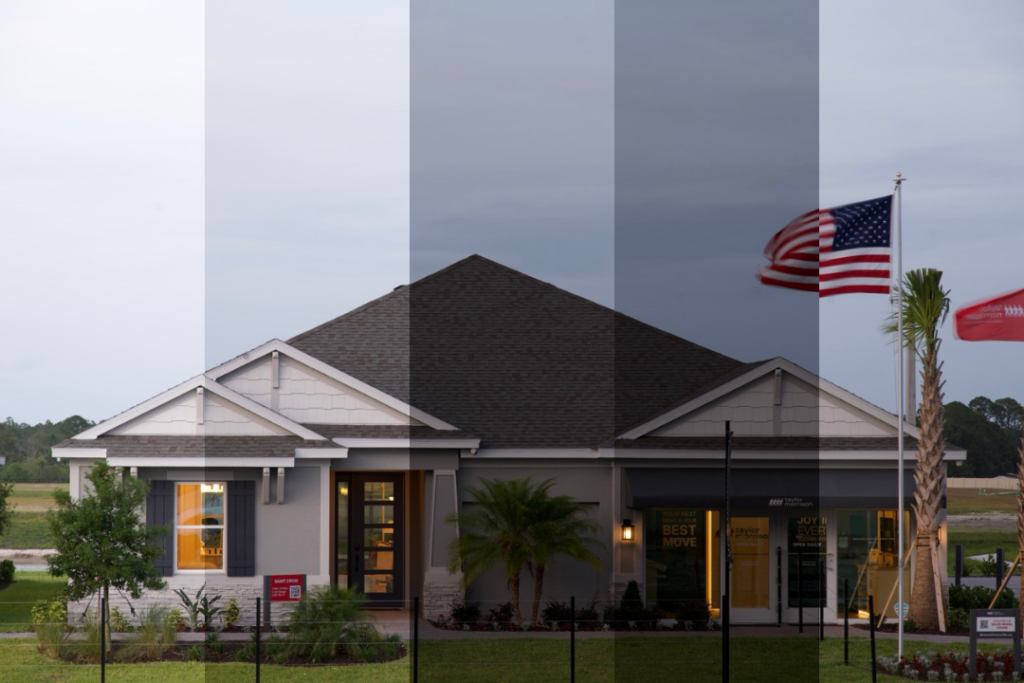

Sky replacement with complex tree lines or irregular architectural edges
AI sky replacement has improved, but it still struggles with fine detail at irregular edges — detailed foliage, decorative rooflines, wrought iron railings. The mask line shows. A human editor catches it; the AI often doesn’t.
Twilight and day-to-dusk conversions
Getting the light balance right between an artificially lit interior, an exterior, and a dramatically lit sky requires judgment about how each light source reads in context. Current AI handles this inconsistently.
Twilight and day-to-dusk conversions
Getting the light balance right between an artificially lit interior, an exterior, and a dramatically lit sky requires judgment about how each light source reads in context. Current AI handles this inconsistently.
Luxury listings where subtlety is the standard
High-end listing photography has less tolerance for anything that reads as processed. The calibration required — slight warmth in the stone, neutral whites in the cabinetry, a sky that’s polished but not overdone — is a judgment call that varies by property and by client. AI doesn’t know what your luxury client considers “off.”
Mixed-light interiors requiring local adjustments
A bedroom with a bright window on one side, a warm lamp on the other, and standard recessed lighting overhead isn’t a standard pattern. Getting that image balanced requires targeted local corrections — masking, selective adjustments — that AI currently applies too broadly or misses entirely.
Shoots where a recurring client has a defined quality standard
If an agent has been working with you for two years and has specific expectations about how their listings look, AI doesn’t know that context. You do.
Consistency across an entire listing gallery
AI often edits each photo independently, causing differences in sky color, brightness, white balance, and overall style across images taken from the same property. A human editor ensures every photo feels cohesive, creating a consistent visual experience from the first image to the last.
AI handles the 80% — the foundational corrections that are consistent across listings. A human editor catches the 20% that requires judgment, context, or a client-specific standard. Understanding that split is what makes the workflow math work.
AI + Human Review
Fast Edits. Trusted Results.
AI handles the workload. Humans handle the quality check.

What AI Actually Saves You
The business case for AI editing isn’t about replacing human judgment. It’s about applying human attention where it actually matters.
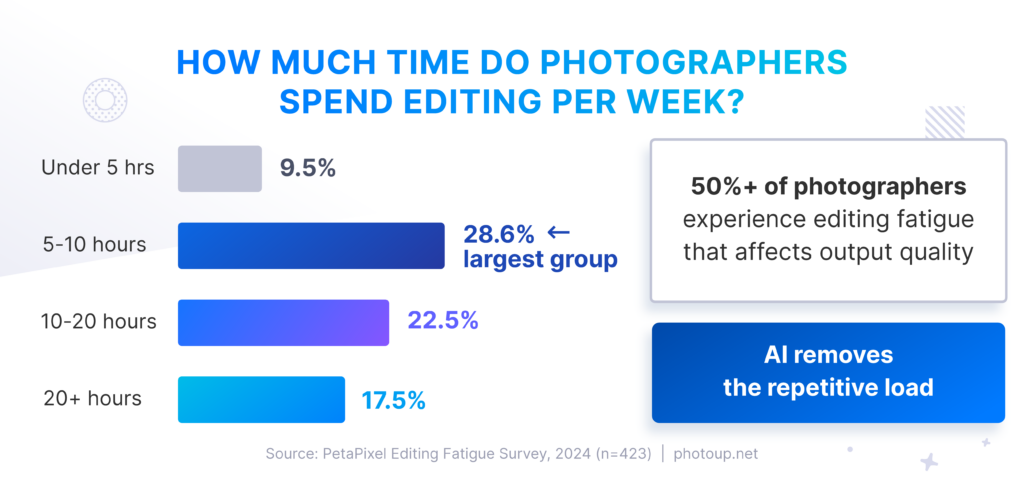
Here’s what a typical high-volume week looks like. A photographer shooting 250 images across several listings, editing manually, spends 5–10 minutes per image on standard edits — 20–40 hours per week in post-production during a busy season. A 2024 survey of photographers found that over 28% spend 5–10 hours per week editing, while another 22% spend 10–20 hours — and over half report experiencing editing fatigue that affects their output quality. 3
Run the same 250 images through a hybrid AI workflow: batch processing handles the foundational corrections, a QC pass takes roughly one minute per image to review and flag anything that needs attention, and flagged images route to a human editor. Total time: 4–6 hours instead of 20–40.
That’s 12–20 hours back per week, every week, in season. It’s the difference between a Tuesday that has room in it and one where you’re still at the computer at midnight.
There’s a second benefit that’s easy to undervalue: consistency. When you’re self-editing under deadline pressure, the fifteenth listing of the week rarely looks as polished as the first. AI doesn’t get tired. Batch processing through a trained model produces consistent output across 300 images the same way it does for 30. For photographers building a recognizable visual style across their portfolio, that matters.
The stakes are real. According to the NAR 2024 Profile of Home Buyers and Sellers, online photos and listing information are among the most valued resources in the home search process — cited as important by approximately 40% of buyers when evaluating properties. 4
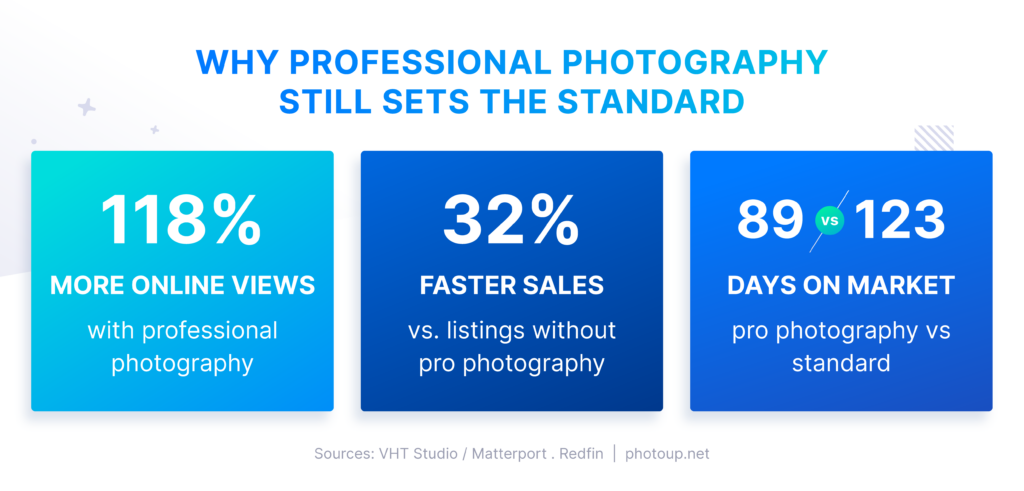
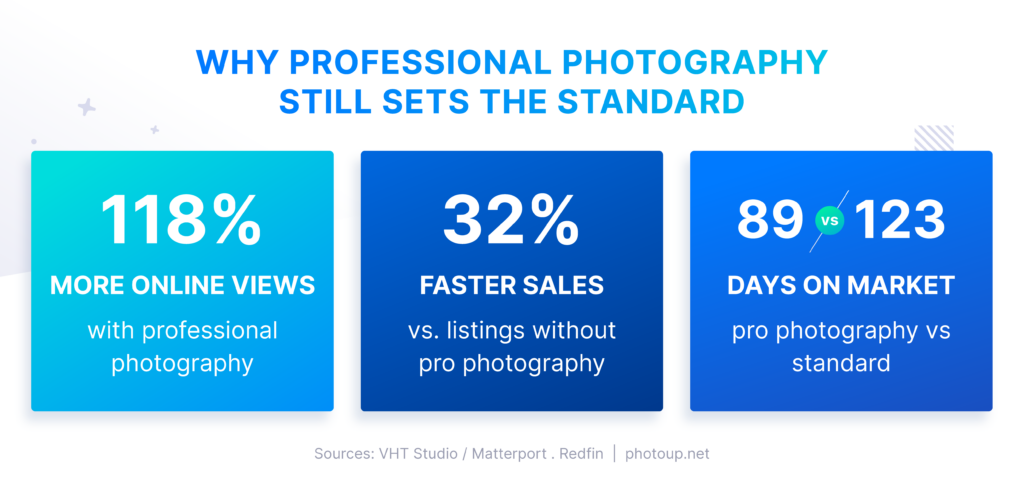
Listings with professional photography receive up to 118% more online views than those with standard images 5 — and homes photographed professionally sell 32% faster, spending an average of 89 days on market compared to 123 days for listings without professional photography. 6
Building a Hybrid Workflow That Holds Up at Scale
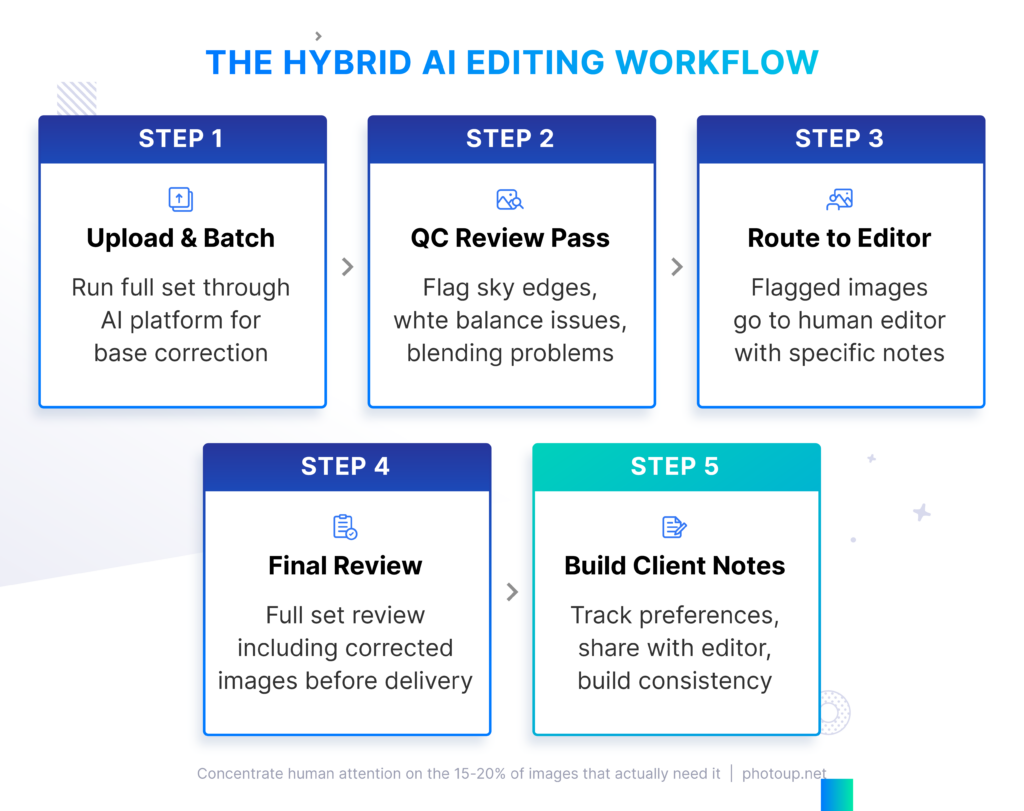
A functional hybrid workflow lets AI handle the volume work and puts human attention on the images that need it. Here’s what that looks like in practice.
Upload and batch through AI
After culling your shoot, run the full set through your AI editing platform. Let it handle exposure, white balance, color correction, and lens correction across the board.
QC review pass
Go through the AI output systematically — not to re-edit everything, but to flag. You’re looking for mishandled sky edges, white balance that’s visibly off, any image where the blending doesn’t hold up. Most images pass. A handful won’t.
Route flagged images to a human editor
Handle the flagged images yourself or send them to a professional editor with specific notes. This is targeted, efficient time — not a full re-edit of the shoot.
Final review before delivery
One more pass across the complete set, including any corrected images. You’re the last set of eyes. That’s the quality gate.
Build client-specific notes over time
Track each major client’s preferences — color temperature tendencies, sky choices, recurring feedback. Share these with your human editor. Over time, this builds consistency that AI alone can’t replicate.
The workflow doesn’t eliminate human involvement — it concentrates it on the 15–20% of images that actually need it. You stay in control of what goes out. You just spend significantly less time getting there.
The Reputation Question — What Happens When AI Gets It Wrong?
For photographers seriously evaluating AI real estate photo editing, the real concern usually isn’t speed. It is risk. Specifically: what happens if I deliver something I wouldn’t have approved?
It’s a fair question. Your reputation is built on consistent delivery, and one bad listing set can strain a client relationship it took two years to build.
The honest answer is that the risk isn’t in AI itself — it’s in skipping the review gate. AI editing without a structured QC pass is where deliveries go wrong. AI editing with a human review step is consistently safer than self-editing under deadline pressure at 11pm with tired eyes and a mental list of three other things you should be doing.
AI + Human Review
Fast Edits. Trusted Results.
AI handles the workload. Humans handle the quality check.
That’s the reframe worth holding onto. The hybrid workflow isn’t “AI instead of quality control.” It’s “AI for the volume, human judgment for the standard.” You’re still approving every image that goes out — you just spent less time getting there. The photographers who’ve successfully integrated AI haven’t lowered their quality standard. They’ve changed where in the process their attention goes. 7
How PhotoUp Can Help You Build That Workflow
PhotoUp’s editing platform is built specifically for real estate photographers who need professional-grade output at volume. Whether you’re looking for AI-assisted editing, a dedicated human editor, or a combination of both, PhotoUp’s workflow is designed to fit how you already shoot and deliver.
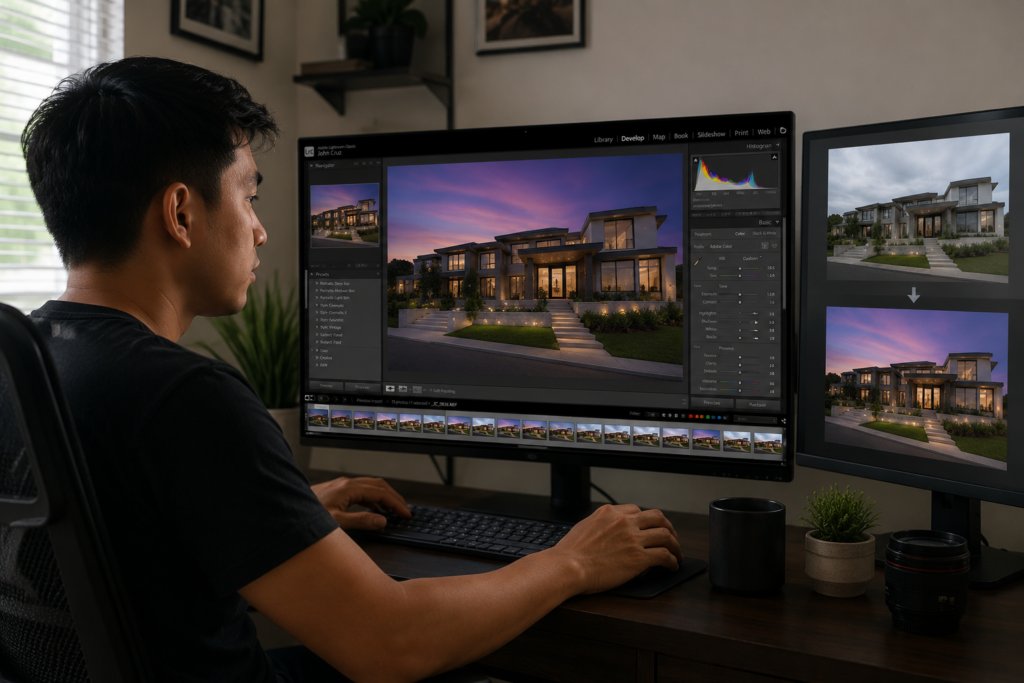
Here’s what PhotoUp offers:
- AI-assisted photo editing — fast batch processing for exposure, color correction, and white balance across full listing sets
- Professional manual editing — human editors for complex edits: twilight conversions, sky replacement with difficult edges, luxury listings, and mixed-light interiors
- Dedicated editors — a consistent editing partner who learns your style and client standards over time
- Virtual staging — photo-realistic staging from empty room photos, delivered with your edited set
- Property websites and virtual tours — market-ready presentation tools alongside your edited images
How to Get Started:
- Sign up for a free PhotoUp account
- Upload your first listing
- Select your editing preferences and turnaround time
- Review and approve your edited images
- Deliver to your client
Try a test order — free. Upload one listing, get edits back in 12 hours, and compare AI-assisted vs. manual editing side-by-side on your own shoot.
Related Articles:
- 7 Workflow Hacks for Photographers to Speed Up Real Estate Photo Editing
- Real Estate Photo Editing for Speed: How Turnaround Time Impacts Momentum
- Key Real Estate Photography Statistics & Trends
References:
- 8.8 Billion Images Later: Aftershoot Snapshot 2025
- Multidimensionality of visual social media marketing and its impact on customer purchase intention on the real estate market
- Over Half of Photographers Often Experience Editing Fatigue, Says Study
- Profile of Home Buyers And Sellers
- Real Estate Photography Stats You Need to Know in 2024
- Homes Listed with Professional Real Estate Photos Sell Quicker and For More Money. This Is Why.
- Photographers saved 89 million hours – 12 work weeks each – using AI in 2025, study suggests