Table of Contents
- What AI Real Estate Photo Editing Services Actually Do Well
- Where a Human Editor Still Has the Advantage
- How the Comparison Actually Plays Out on a Real Listing Set
- The Real Cost of Getting This Wrong
- How to Choose the Right AI Real Estate Photo Editing Service
- Why PhotoUp Uses Both — And Why That’s the Point
If you shoot real estate photography at any kind of volume, editing is probably your biggest time sink. Most photographers spend more time in Lightroom than behind the camera — and that’s usually when AI real estate photo editing services start looking appealing.
The real question isn’t speed — it’s quality. Will an AI-edited photo look like something you’d actually deliver to a client? The honest answer is sometimes yes, sometimes no, and knowing the difference is what this article is about.
This piece breaks down exactly what AI handles well, where human editors still hold the advantage, and how to think about combining both so your output stays consistent whether you’re editing 10 images or 200.
What AI Real Estate Photo Editing Services Actually Do Well 📸
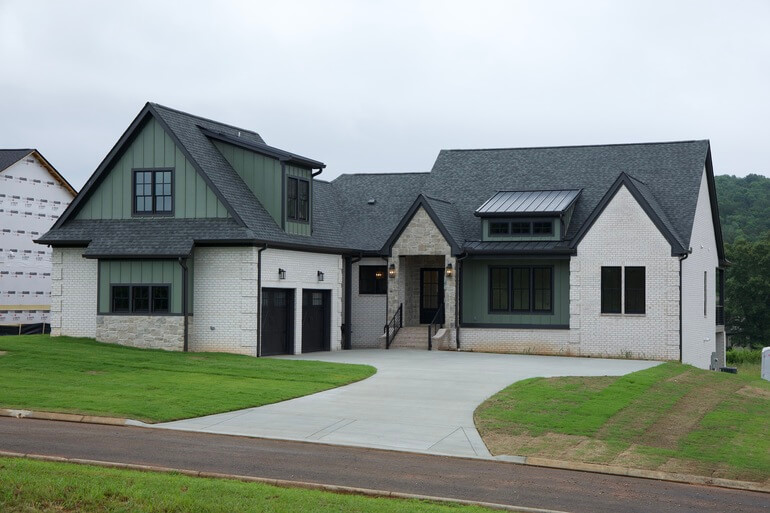
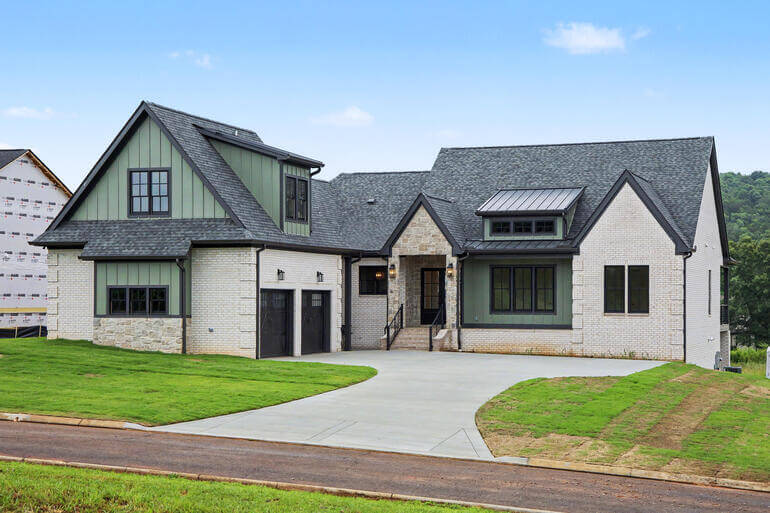
AI photo editing has come a long way from the automated presets of the past. Modern tools are trained on millions of property images, allowing them to handle common corrections quickly and consistently.
Here’s where AI consistently performs:
- Exposure balancing across bracketed HDR sets — AI merges exposure brackets cleanly on standard, well-lit interiors
- White balance correction on daytime interiors — accurate color temperature on typical natural-light shots
- Batch color consistency — keeps a 40-image listing set looking cohesive without manual adjustment on each frame
- HDR blending on clean shots — handles the technical merge well when there are no major alignment or motion issues
- Basic object removal — small distractions, power outlets, minor clutter
- Perspective and lens correction — straightens verticals, corrects barrel distortion, normalizes wide-angle shots
The throughput advantage is real. While self-editing can take several hours per listing, AI-assisted services can often process the same batch in under an hour, with turnaround times as fast as 12 hours.
AI excels at the technical corrections that are consistent across listings and don’t require creative judgment. For many standard residential shoots, AI can handle 80–90% of the editing workload. The question is where that remaining 10–20% still requires a human touch.
AI + Human Review
Fast Edits. Trusted Results.
AI handles the workload. Humans handle the quality check.

Where a Human Editor Still Has the Advantage 🏡

Understanding where AI falls short isn’t a knock on the technology — it’s just an accurate read of what it was built to do. AI is pattern-matching at scale. When a shot falls outside the pattern it was trained on, the output degrades in ways that are easy to miss at first glance and hard to explain to a client.
These are the scenarios where human judgment still matters:
- Sky replacements with complex edges — tree canopies, irregular rooflines, and architectural details with fine edge work require a human to make the blend look natural
- Twilight and day-to-dusk conversions — the color grading and sky work involved in a convincing dusk conversion is a multi-step process that AI rarely nails without correction
- Luxury listings — at the higher end of the market, “good enough” isn’t a standard. Clients and agents at this tier have a calibrated eye, and the margin for error is thin
- Mixed-light interiors — rooms with competing light sources (window light, tungsten fixtures, LED accents) need localized color corrections that AI applies globally
- Recurring clients with defined style preferences — if a client has a non-standard look they’ve built their brand around, AI won’t know that history
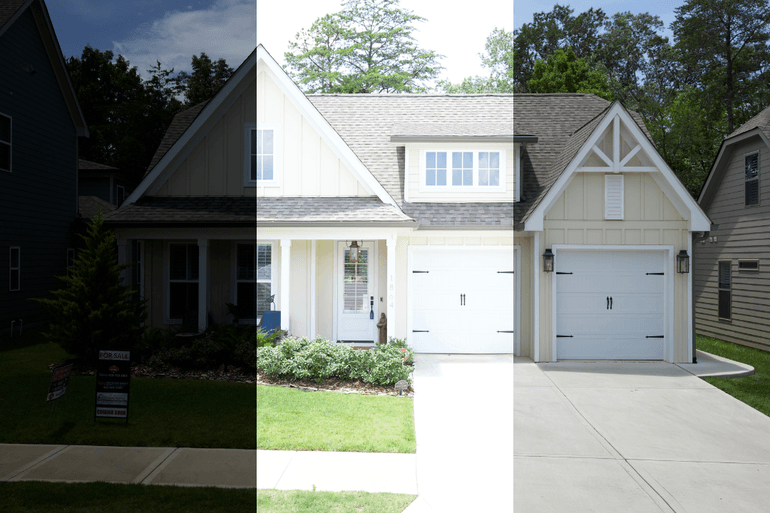
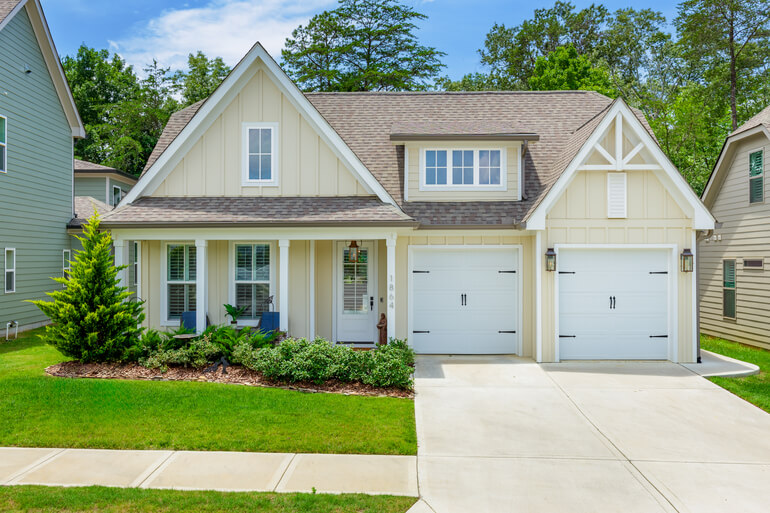
The real question isn’t how quickly AI can edit photos—it’s whether you’d feel comfortable putting those edits in front of a client. The strongest services address that concern by combining automated processing with human oversight, creating a workflow that’s both efficient and reliable.
How the Comparison Actually Plays Out on a Real Listing Set 🖼️
Put the two side by side on a typical shoot and the picture gets clearer.
Standard single-family residential listing — 35 images, natural light, typical suburban interior. AI handles exposure balancing, white balance, HDR blending, and lens correction without issue. The output is clean, consistent, and ready to deliver. A human editor reviewing the batch might fine-tune two or three frames where the white balance ran slightly warm, but the lift is minimal. AI wins on speed here with no meaningful quality gap.
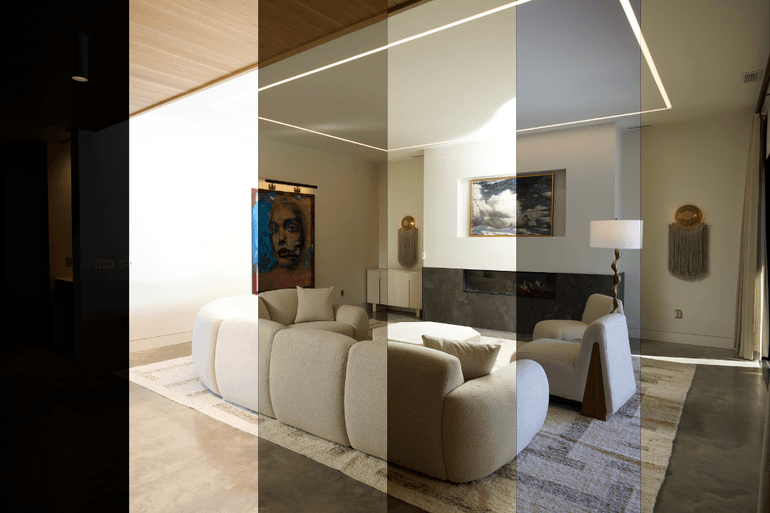
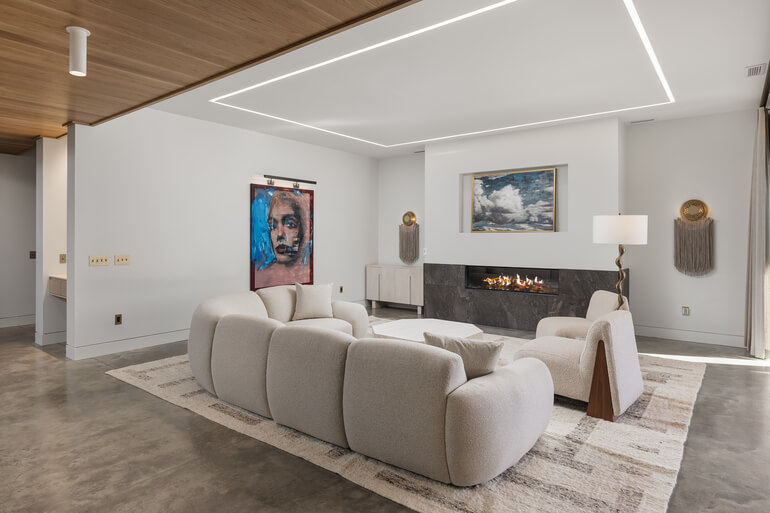
Luxury waterfront property — 50 images, mixed interior and exterior, floor-to-ceiling windows with blown-out views, a pool deck shot at dusk, a kitchen with under-cabinet LED lighting competing with late afternoon sun. AI gets the easy frames right. But the window pull requires local masking, the dusk exterior needs detailed sky work, and the kitchen requires independent color treatment on the ambient vs. artificial light zones. A human editor earns their place on this shoot.
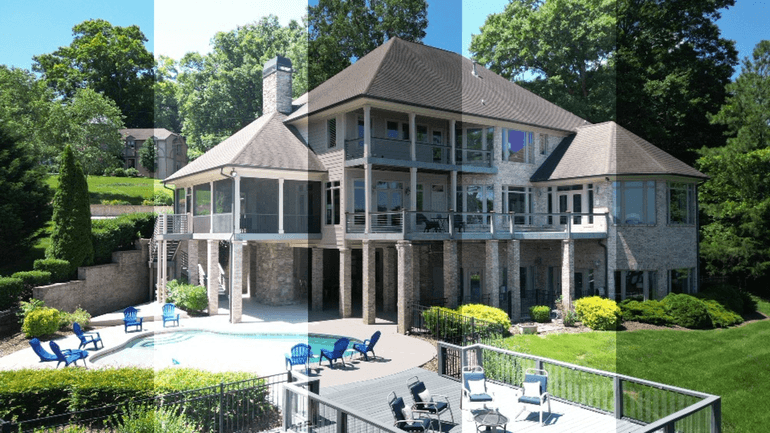
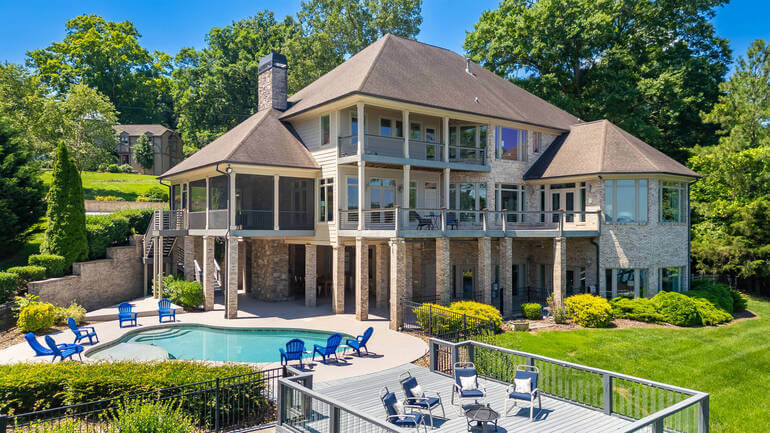
The realistic takeaway: most photographers shoot both types of listings. The question isn’t AI or human — it’s knowing which images in a given shoot need which treatment. That distinction has a real dollar value, which we’ll get into next.
The Real Cost of Getting This Wrong 💡
Research shows that 85% of buyers consider listing photos the most important part of a property listing, and they spend about 60% of their viewing time on images versus 20% on the description. Small editing issues can have an outsized impact on how a property is perceived.

The time cost adds up, too. Many real estate photographers spend 15–25 hours per week editing. At $75 per hour, that’s $1,100–$1,875 in time that could be spent shooting, marketing, or growing the business.
The biggest risk with AI isn’t usually a bad edit—it’s not having a review process in place to catch mistakes before delivery.
How to Choose the Right AI Real Estate Photo Editing Service 🏠
Not all AI real estate photo editing services are built the same, and the differentiators matter when you’re putting your client deliverables through someone else’s pipeline.
What to look for:
- A human review gate — AI processes the batch, human editors catch what needs correction before delivery. Non-negotiable.
- Consistent turnaround — 12–24 hours for standard sets. Same-day availability for rush work.
- Output consistency — does the service deliver a cohesive set, or do individual images vary in color temperature and exposure treatment?
- Revision process — straightforward, with a clear standard for what counts as a correction
AI + Human Review
Fast Edits. Trusted Results.
AI handles the workload. Humans handle the quality check.
Questions worth asking:
- Does the service flag images that fall outside standard AI processing for manual attention?
- Is there a way to communicate client-specific style preferences?
- What’s the escalation path when something comes back wrong?
Red flags:
- Claims of full automation with no human QA step
- No revision policy or unclear what constitutes an acceptable result
- Turnaround times that are either suspiciously fast (under 4 hours for 50+ images) or vague
The best services are upfront about the hybrid model. They don’t oversell what AI does, and they don’t understate the role of their editors. That transparency is itself a trust signal. PhotoUp is one of those services — and here’s how the model actually works.
Why PhotoUp Uses Both — And Why That’s the Point 📸

PhotoUp combines AI efficiency with human expertise. AI manages the routine corrections across your listing set, while professional editors review and refine the results to ensure consistent, client-ready quality.
The result is turnaround that scales with your shooting volume — without sacrificing the consistency your clients expect.
PhotoUp’s real estate editing services include:
- Professional real estate photo editing (HDR, exposure, color correction)
- AI-powered virtual staging
- Property websites
- Virtual tours
- Day-to-dusk conversions
- Object removal and decluttering
- Video editing
Why photographers choose PhotoUp:
- Human-reviewed output on every order — AI efficiency without unreviewed automation
- 12-hour standard turnaround, with rush options available
- Consistent results across listing sets, not just individual images
- Straightforward pricing with no subscription required
- Dedicated editing team familiar with real estate photography standards
To get started, create a free PhotoUp account. Try a test order — free. Upload one listing, get edited photos back in 12 hours, and see exactly how the output compares to your current workflow.
Related Articles: