Table of Contents
- The Bottleneck Isn’t the Shooting
- What Makes Real Estate Photography Different From Other Niches?
- 6 Ways a Virtual Assistant Changes a Real Estate Photography Business
- Where a Generic Virtual Assistant Falls Short
- A Coordinator Owns the Outcome, Not the Task List
- Build Your Real Estate Photography Support Team
A busy week in real estate photography rarely gets derailed by the shooting. It gets derailed by everything around it: unconfirmed appointments, agents asking when their photos will land, revision requests waiting on a reply, and new inquiries sitting unanswered until the editing queue clears.
Real estate photography generates more admin work per dollar of revenue than almost any other niche, and most of it lands on the photographer personally.
This article breaks down where that work comes from, what a real estate photography virtual assistant can take off your plate, and where a generic assistant stops being enough for a business built on agent relationships and next-day turnaround.
The Bottleneck Isn’t the Shooting
Ask a real estate photographer what they do for a living and they’ll say photography. Look at their calendar and you’ll see something different. A large part of the job happens away from the camera, with hours spent scheduling shoots, answering inquiries, sending invoices, tracking payments, and managing client communication.
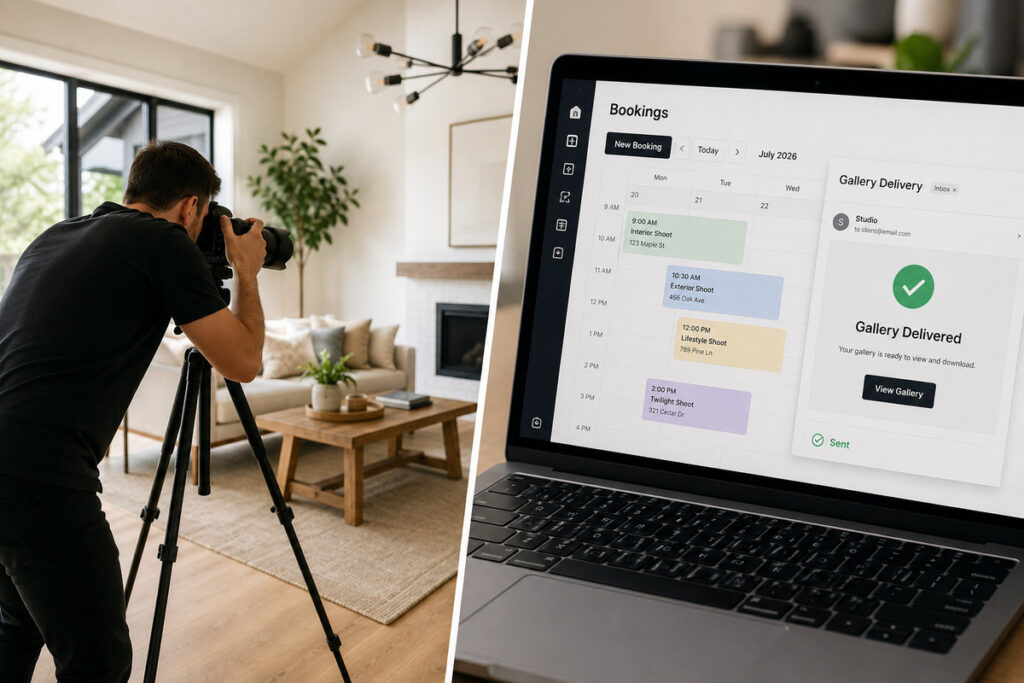
For a real estate photographer, the workload grows with every listing. Each shoot sets off a chain of tasks that has nothing to do with taking photos: booking inquiries, confirmations, access details, reminders, editing handoffs, gallery delivery, revision requests, invoices, and follow-ups. Every one of those touchpoints matters, and a missed email or forgotten update can easily affect the client experience.
Many photographers choose to handle everything themselves because it feels like the best way to maintain quality and stay in control. While that approach can work early on, it becomes harder to sustain as bookings increase. Administrative work starts competing with the time and energy needed for photography itself.
Before looking at what delegation solves, it’s worth understanding why this niche is especially challenging for solo operators.
What Makes Real Estate Photography Different From Other Niches?
A wedding photographer books a client once and delivers in four to six weeks. A real estate photographer might shoot for the same agent forty times a year and deliver every job within 24 hours. That gap dictates how the whole business has to run.
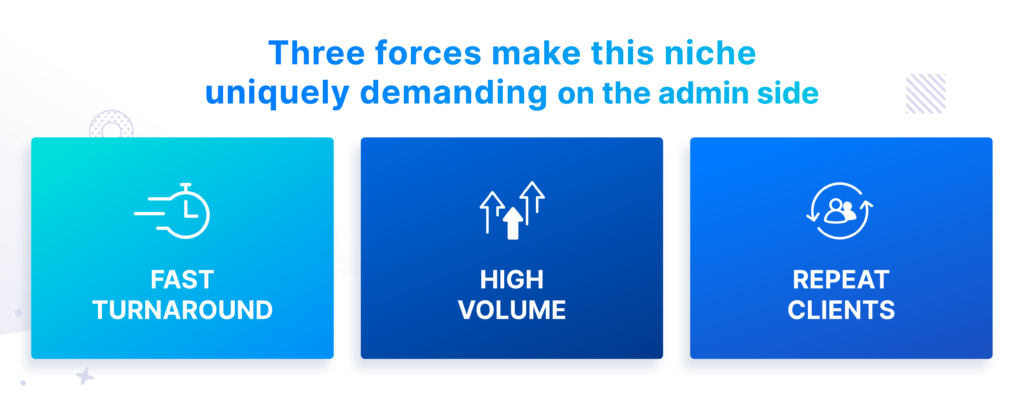
- Turnaround is measured in hours, not weeks. Agents want listings live fast, and photography is the asset holding them up. Redfin’s study of listing photography found that professionally photographed homes in the $400K range sold 21 days faster and for $11,200 more than homes with amateur photos.1 Agents know this, which is why they pay for professionals and expect speed
- Volume is the business model. Real estate photography margins come from shooting many properties efficiently, not from charging thousands per session. More jobs means more coordination per week, not less
- Repeat clients are the whole game. In the NAR’s 2024 Profile of Home Buyers and Sellers, buyers rated photos the most valuable feature on listing websites (41%), ahead of property details and floor plans.2 Photography is a recurring need for every active agent, and the photographer who is easiest to work with gets the next listing
Notice what those three forces have in common. None of them are about photographic skill. A real estate photography business rarely fails because the photos got worse. It fails, or stalls, at the layer where bookings, communication, and delivery live.
That layer is exactly what a virtual assistant exists to handle.
6 Ways a Virtual Assistant Changes a Real Estate Photography Business
A real estate photography virtual assistant is a remote team member who handles the operational and relationship work around your shoots. The best way to see the impact is to walk through the specific tasks photographers can delegate and what each one is worth.
1. Booking management that doesn’t wait until you’re off a shoot
When you’re photographing a property, you’re often unable to answer new inquiries or update your schedule. A virtual assistant can respond to clients, check your availability, book appointments, and send confirmations while you’re focused on the shoot.
They can also coordinate access details, send reminders, manage rescheduling, and keep your calendar organized. By handling these routine tasks behind the scenes, you can spend more time shooting and less time catching up on administrative work.
2. Editing coordination that keeps turnaround predictable
Whether you edit photos yourself, outsource them, or use an AI-assisted workflow, someone still needs to manage the process. A virtual assistant can organize uploads, brief editors, track deadlines, and monitor each project to keep everything moving on schedule.
They can also coordinate revision requests, answer editor questions, and make sure galleries are delivered on time. With someone overseeing the workflow, you spend less time managing files and more time behind the camera.
With the right real estate photography virtual assistant overseeing the workflow, you spend less time managing files and more time behind the camera.
3. Delivery and revisions handled the same day
Finishing the edit is only part of the job. A virtual assistant can prepare galleries, send delivery emails, attach invoices, and confirm clients have everything they need for their listings.
They can also manage revision requests by logging feedback, coordinating with editors, and following up until each request is completed. This helps keep communication timely and ensures clients receive a smooth, professional experience from delivery to final approval.
Focus on Photography
We'll Handle the Rest
Save time with a dedicated PhotoUp Coordinator.

4. Agent communication that doesn’t slip during busy season
Client communication doesn’t stop when you’re on location. A virtual assistant can respond to routine questions about booking status, delivery timelines, scheduling, and other day-to-day inquiries across email and messaging platforms.
By keeping clients informed with timely updates, your business remains responsive even during your busiest weeks. Consistent communication builds trust and helps create a smoother experience that encourages clients to book with you again.
5. A CRM that stays current when you’re too busy to open it
Most photographers have client records scattered across a booking tool, a phone, and memory. A virtual assistant can keep an actual CRM current: which agents book monthly, which went quiet, which brokerage just added three new agents worth introducing yourself to.
None of this is urgent on any given day. All of it decides how busy you are next quarter.
6. Follow-up that turns one shoot into a monthly client
After a project is delivered, client follow-up is often the first task to be overlooked. A virtual assistant can check in with clients, send friendly reminders, reconnect with past customers, and keep your business top of mind between listings.
Consistent follow-up strengthens client relationships and encourages repeat bookings without adding more work to your schedule. Combined with support for booking, editing coordination, delivery, and communication, a virtual assistant helps create a smoother client experience that supports long-term business growth.
Where a Generic Virtual Assistant Falls Short
Hiring a general virtual assistant can help with routine administrative work, but real estate photography has workflows that require more than basic task management. Without industry knowledge, a generic VA may need extensive training on scheduling priorities, client expectations, and the overall photography process.
As your business grows, disconnected support can also create bottlenecks. If booking, editing coordination, delivery, and follow-up are handled separately, you’re still responsible for keeping every project on track. A virtual assistant who understands the real estate photography workflow can provide more consistent support, reduce oversight, and help your business run more efficiently.
A Coordinator Owns the Outcome, Not the Task List
Many photographers start by looking for a virtual assistant, but as the business grows, they often need someone who can take ownership of an entire workflow rather than individual tasks. Instead of requiring constant direction, a dedicated coordinator manages key business operations from start to finish, allowing you to stay focused on photography.

A Production Coordinator oversees the operational side of your business, including scheduling, booking confirmations, order management, coordination with the editing team, turnaround tracking, gallery delivery, and revision management.

A Growth Coordinator focuses on client relationships by managing your CRM, responding to inquiries, maintaining your marketing and social media presence, and following up with past clients to encourage repeat business.
As your business evolves, so does your support. Coordinators are trained to use modern AI tools that enhance editing and marketing workflows, and they’re prepared to take on additional responsibilities as your needs grow. You can start with the support you need today and confidently delegate more over time without starting the training process from scratch.
Build Your Real Estate Photography Support Team
PhotoUp has spent years as the editing team behind thousands of real estate photographers. Coordinators extend that support to everything editing sits inside of, with two roles you can hire individually or as a team:
- Production Coordinator: booking, scheduling, order management, editing coordination, delivery, and revision handling
- Growth Coordinator: CRM management, marketing and social media, inquiry response, and client follow-up
- Both together: a complete operations and growth team behind one photographer
Focus on Photography
We'll Handle the Rest
Save time with a dedicated PhotoUp Coordinator.
Why choose PhotoUp?
PhotoUp Coordinators are dedicated to your business and trained in real estate photography workflows from day one. They also know how to use modern AI tools to support editing and marketing, and they can take on more responsibilities as your business grows, without the need for repeated onboarding.
How to get started:
- Book a consultation and walk us through how your business runs today
- Tell us where jobs slip: booking, delivery, follow-up, or all three
- Meet your Coordinator and hand off your first workflow
- Add capability over time as your volume grows
Ready to work with a real estate photography virtual assistant who understands your business? Build your support team with PhotoUp and spend more time behind the camera.
References: